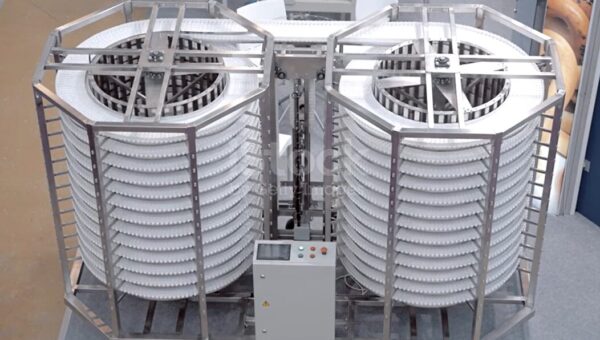
How Can We Avoid Weld Burrs on Spiral Freezer Belts Affecting Spiral IQF or Oven Equipment Operations?
Are you tired of unexpected production issues? The tiny details, like weld burrs, can create huge problems for your spiral freezer or oven equipment. Don't let them cost you money and product quality.
Avoiding weld burrs on spiral freezer belts is critical because these belts often operate in high-speed, friction-driven systems. Even small burrs on inner welds can cause significant wear and tear on the equipment's U-bars, leading to metal shavings, contamination of products, and costly production downtime.

I know how frustrating it is when a seemingly minor issue derails your entire production line. Let's dive into how we can tackle this silent threat head-on and keep your operations running smoothly.
What Exactly are Spiral Freezer Belts, Anyway?
Is your production line struggling with inconsistent product freezing or cooking? The heart of many continuous processing systems is often a specialized conveyor belt designed to handle extreme temperatures and heavy loads.
If you're seeing issues, it might be time to understand the core component: the spiral freezer belt. These belts are essential for moving food, components, or other items through a controlled thermal environment. They coil upwards, creating a compact, continuous path.
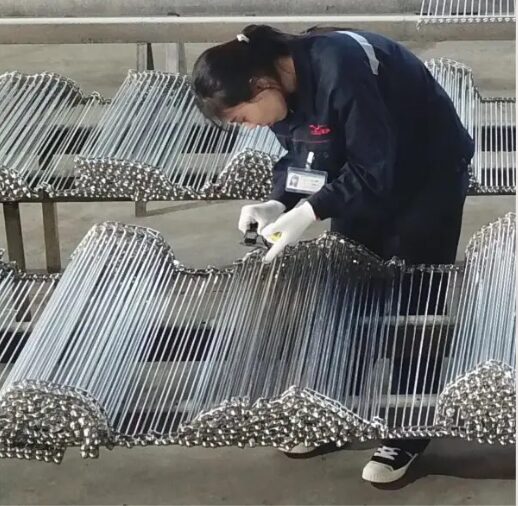
I want to share how we approach this critical aspect of quality. Our SOPs for burr removal begin immediately after the welding process. We do not just rely on visual inspection, although that is a part of it. Our skilled technicians use specialized tools, such as grinding wheels, files, and abrasive brushes, to carefully smooth down any remaining burrs. This process is meticulous, as even the smallest protrusion can cause problems later. For critical areas, we often employ magnifying equipment to ensure complete removal. Furthermore, after initial burr removal, belts undergo a rigorous cleaning process to eliminate any residual metal particles or dust. This cleaning is not just for appearance; it is essential for preventing contamination in sensitive applications like food processing. Finally, a thorough quality inspection, including tactile and visual checks, confirms that the belt surfaces are perfectly smooth and free from any sharp edges. Our commitment to these detailed steps is part of why we can guarantee reliable quality and offer customizable options with no minimum order quantity. We understand the importance of delivering a product that performs flawlessly in your machinery.
Here is a summary of our SOPs for effective burr removal:
| SOP Stage | Description | Tools/Techniques Used | Quality Check Point |
|---|---|---|---|
| Post-Weld Initial Deburring | Immediately after welding, rough removal of major burrs. | Angle grinders, coarse files, power brushes. | Visual inspection for major protrusions. |
| Precision Grinding/Filing | Fine-tuning and smoothing of weld areas to achieve a flush surface. | Precision grinders, fine files, pneumatic deburring tools. | Tactile inspection (gloves), magnification for small burrs. |
| Abrasive Blasting/Tumbling | For certain belt types, use abrasive media to smooth all surfaces evenly. | Sandblasting, bead blasting, vibratory tumbling with media. | Surface finish analysis, consistency checks. |
| Chemical Cleaning/Passivation | Removing any remaining micro-particles and enhancing corrosion resistance. | Acid baths (diluted), ultrasonic cleaning, rinsing, passivation treatments. | pH testing, surface cleanliness checks. |
| Final Inspection & Certification | Comprehensive manual and automated checks for burr presence and overall quality. | High-resolution cameras, tactile checks by trained inspectors, data logging. | Full compliance with product specifications and client requirements. |
By adhering to these strict SOPs, we ensure that every metal conveyor belt leaving our 27,000 square meter facility, including our 12,000 square meter production workshop, is of the highest quality, ready for your machinery.
Conclusion
Weld burrs on spiral freezer belts can cause significant contamination and equipment damage. By understanding their impact and implementing rigorous manufacturing SOPs, we can prevent these issues and protect product integrity.