
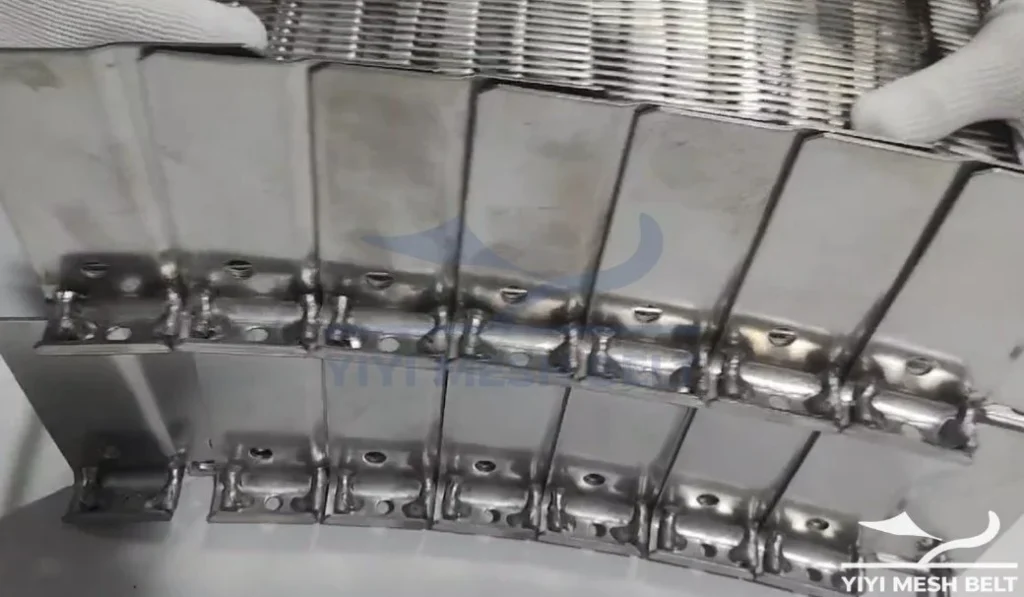
Many buyers see a finished self-stacking belt and never see how it was built. That is a risk, because a stack problem found at installation costs far more than one found in the factory.
A self-stacking belt is made in six controlled stages at YIYI Mesh Belt: drawing approval, trial production, stack matching verification, mass production, final inspection, and packing with records. We draw the wire in-house, form the spirals and side plates, then check layer engagement before we build the full length.
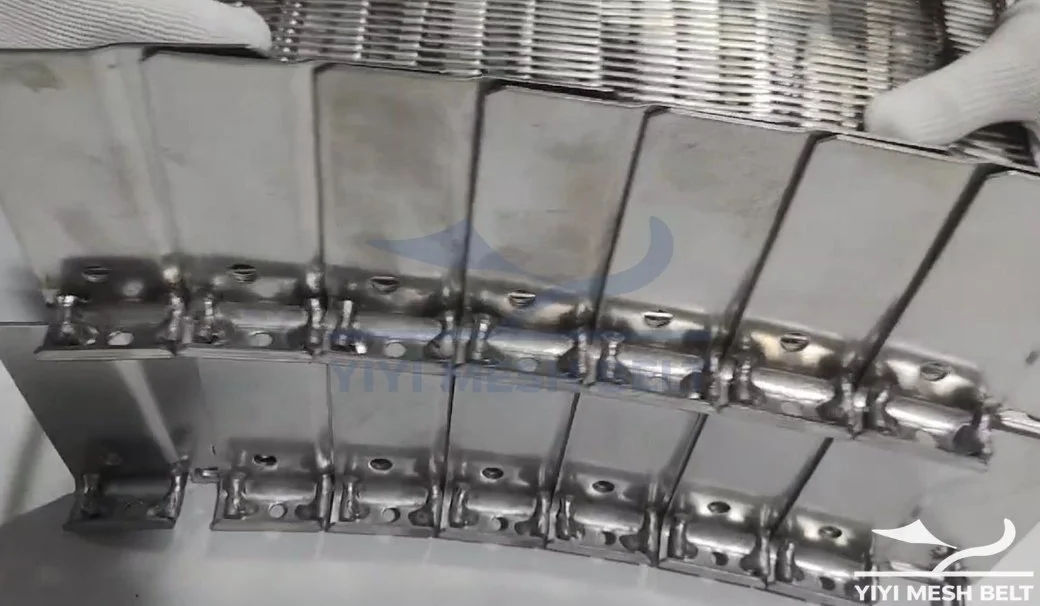
I am Sunny Ye, Global Sales Director at YIYI Mesh Belt. Our factory in Ningjin, Shandong, covers about 27,000 m², and Ningjin Yiyi Mesh Belt Co., Ltd. was established in 2008. In this article I walk you through each stage, so you know what to check with any self-stacking belt manufacturer before production starts.
Contents
- What does the factory need before production starts?
- How are the wire, rods and spirals prepared?
- How are the side plates formed and assembled?
- Why build a trial section before mass production?
- How is the stack checked before the belt ships?
- How is the belt packed and recorded for repeat orders?
- When this is not the right choice
- FAQ
At a Glance
| Item | Details |
|---|---|
| Product | Self-Stacking Belt (stainless steel SUS304 / SUS316) |
| Application | Self-stacking and self-supporting conveyor systems, especially approved spiral freezer structures |
| Key parameters to confirm | Belt width, spiral pitch, rod pitch, rod diameter, guard (side plate) height, turn ratio, rotation direction, surface finish |
| Buyer type | Freezer OEMs, belt specialists and distributors, end users with existing systems |
| What to send for a quote | Drawing, or a sample section or clear photos of the current belt, plus width, length and equipment details |
What does the factory need before production starts?
A self-stacking belt starts with a drawing, not with wire.
Before production, we need an approved drawing or a physical sample, plus the width, length, material, spiral pitch, rod pitch, guard height, turn ratio and equipment details. These figures fix the stack geometry. If one of them is wrong, every layer in the stack carries the error.
In my experience, most problems with a self-stacking belt are decided before the first wire is cut. A self-stacking belt carries its own weight. Each layer sits on the side plates of the layer below. So the side plate height, the rod position and the plate angle must all agree with the equipment. A spiral freezer belt on a drum system is more forgiving. A self-stacking belt is not.
That is why our first stage is drawing approval. We confirm dimensions, materials and equipment interfaces with you in writing. If you only have an old belt, we work from a sample section and your photos. We then turn the sample into a drawing, and you approve it before we order or prepare any material.
Our current self-stacking belt range
| Parameter | Metric (mm) | Inch (in) |
|---|---|---|
| Material | SUS304 / SUS316 | — |
| Spiral pitch | 6 / 9 / 13 | 0.24 / 0.35 / 0.51 |
| Rod pitch | 30 | 1.18 |
| Rod diameter | 5 | 0.20 |
| Guard (side plate) height | 60 / 80 / 90 / 100 / 120 | 2.36 / 3.15 / 3.54 / 3.94 / 4.72 |
| Belt width | 420 / 580 / 640 / 660 / 760 | 16.5 / 22.8 / 25.2 / 26.0 / 29.9 |
| Turn ratio | 1.6 / 1.7 | — |
| Rod-to-stack-plate gap | 1–2 | 0.04–0.08 |
| Surface | Pickling / electropolishing | — |
Millimetres are the working unit. Inch values are rounded for reference. Other sizes go to engineering review against your drawing.
How are the wire, rods and spirals prepared?
The belt is only as consistent as the wire it starts from.
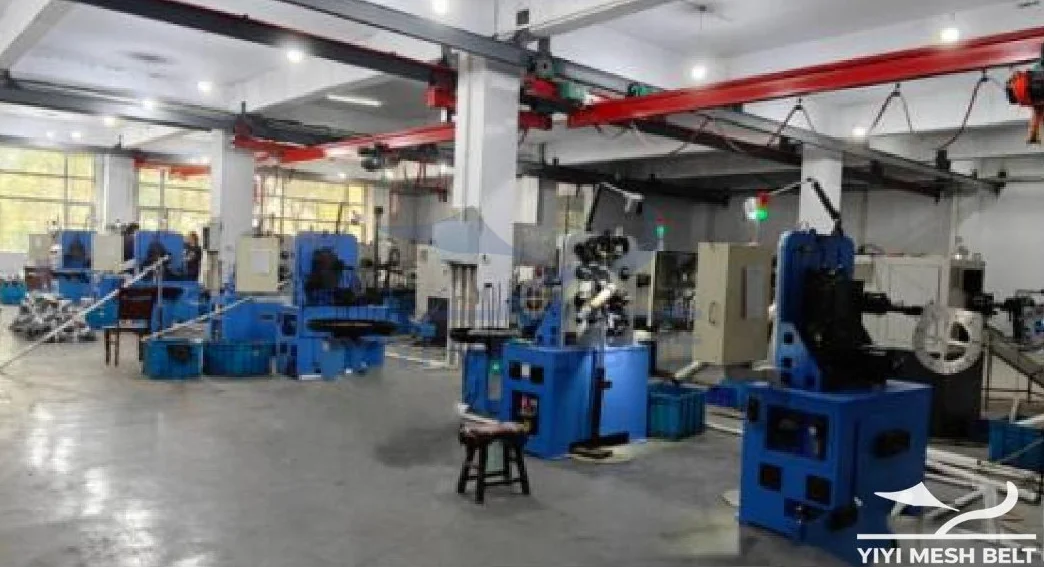
We draw stainless steel wire and round bar in-house, and we check every incoming material batch with spectral and hardness testing. We then measure wire and rod diameters against the approved drawing, form the spiral elements, and check trial spirals before the batch continues.
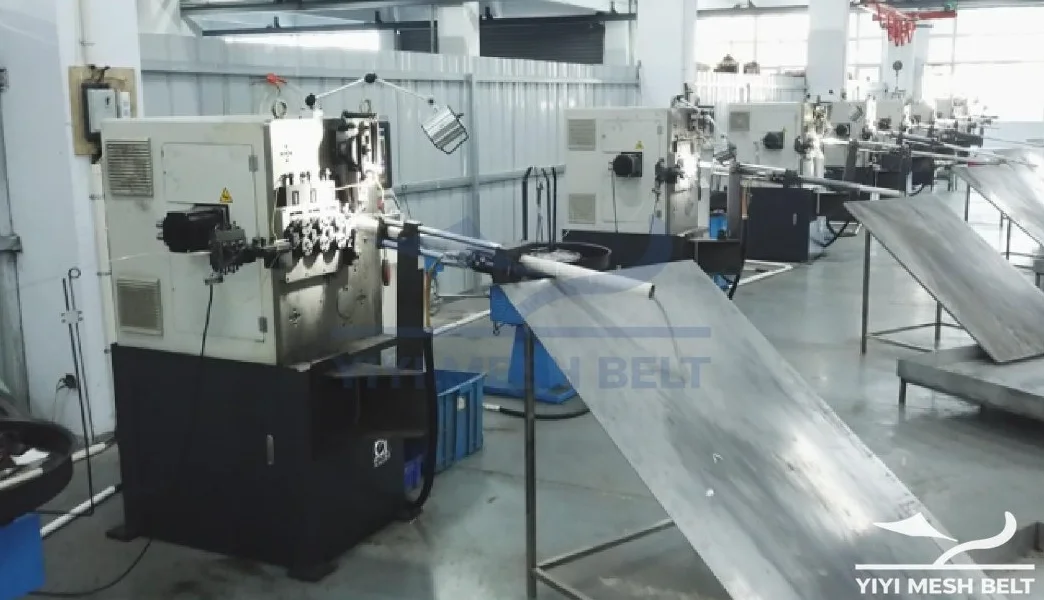
I often tell buyers that wire is where repeat orders are won or lost. If the wire diameter drifts, the spiral changes. If the spiral changes, the belt no longer sits the same way on the rods. So we control the wire before it becomes a belt.
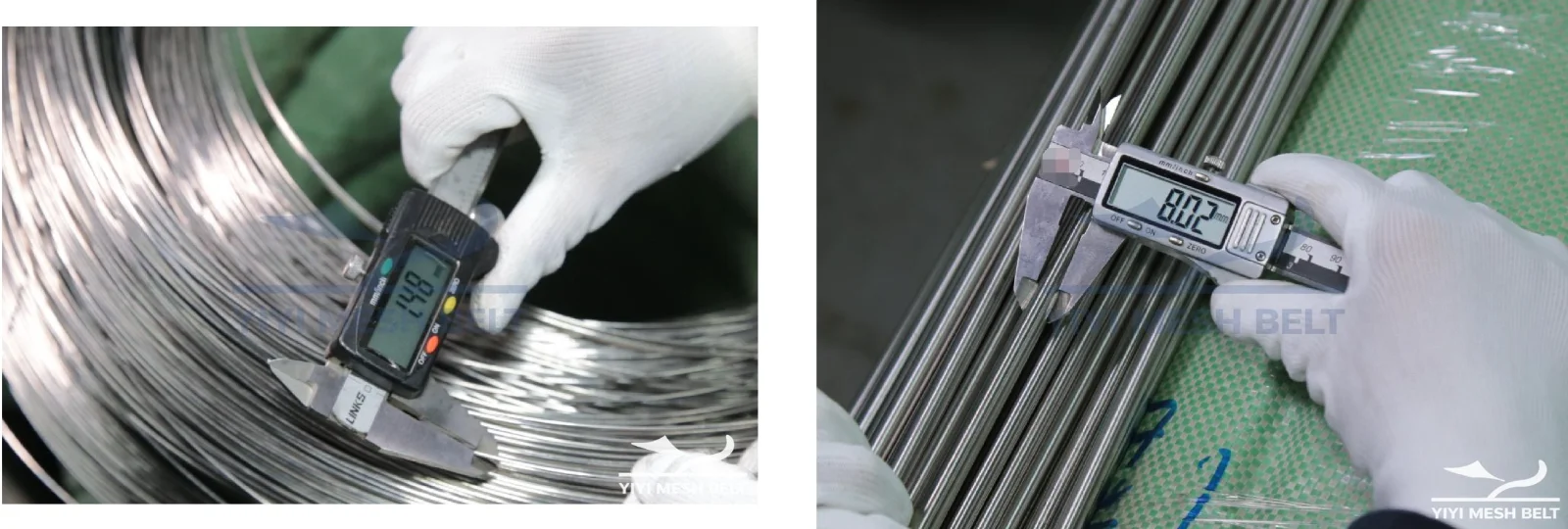
What we check at the material stage
| Stage | What we check | When |
|---|---|---|
| Wire drawing | Material grade and wire diameter against the approved specification | Before forming |
| Round-bar drawing | Rod material and diameter for the belt design | Before assembly |
| Incoming material | Alloy composition screening and hardness testing | Every incoming batch |
| Diameter checks | Wire and rod diameters in mm / in | Before batch production |
| Spiral forming | Formed spiral geometry against the approved drawing | Trial pieces, before the batch continues |
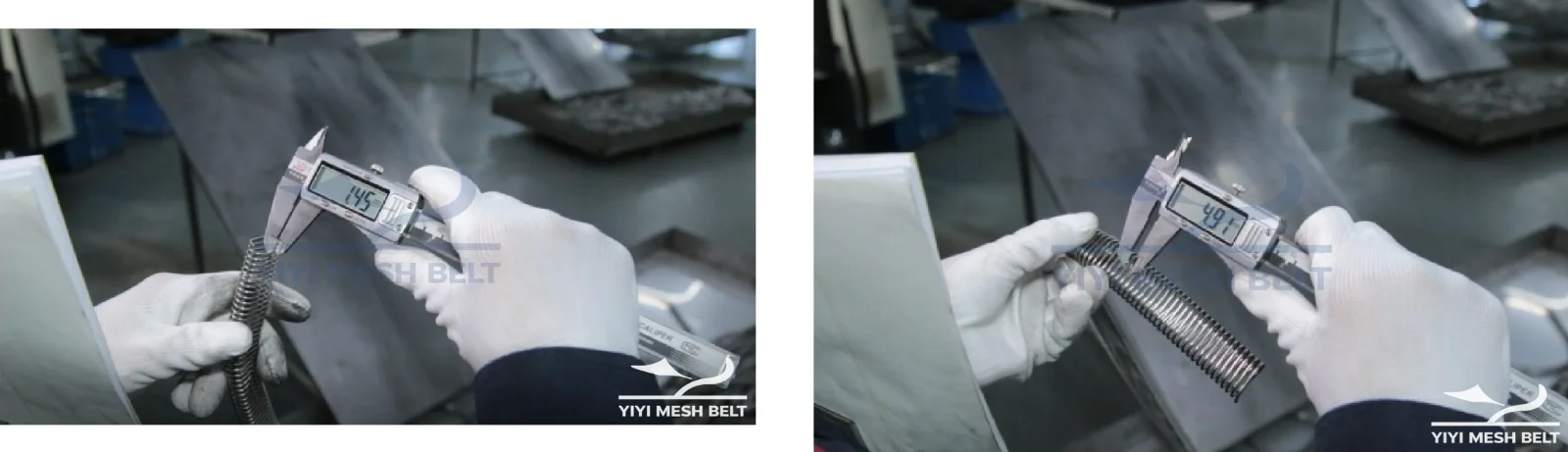
One limit is worth saying clearly. Our in-house wire drawing does not mean every size on every order is drawn by us. The test method, the acceptance criteria and the material documentation you need are agreed for each project.
How are the side plates formed and assembled?
The side plates are what make a self-stacking belt stack.
We form the side plates to the approved guard height and check each plate angle with an angle gauge. Then we assemble the spirals, rods and stacking structure to the drawing, keep a 1–2 mm gap between rod and stack plate, straighten the belt, and check the weld condition.
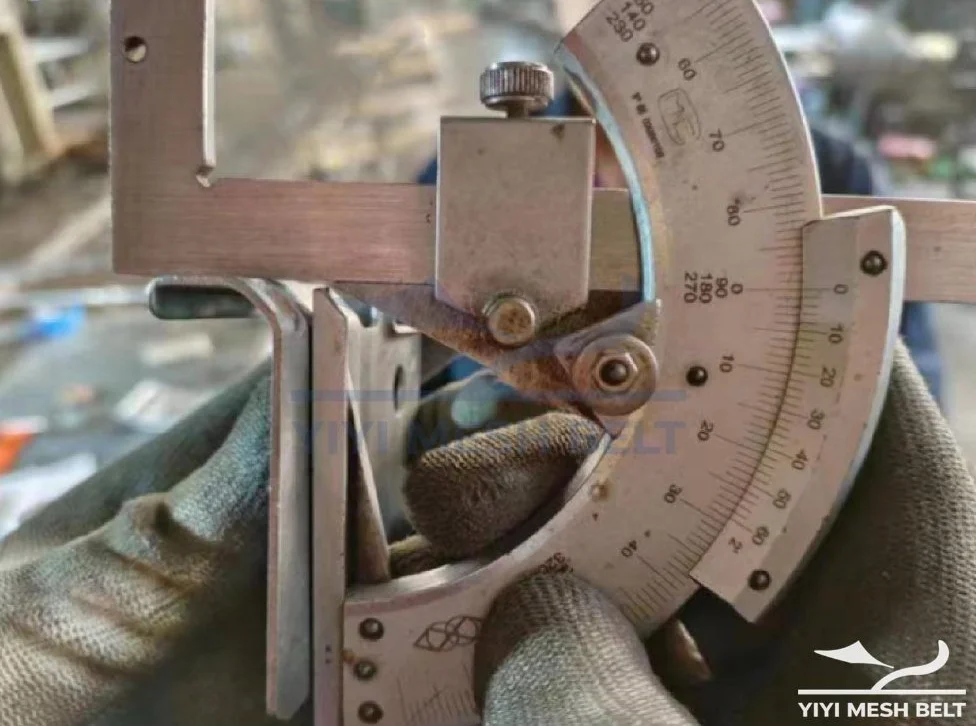
The plate angle decides how the upper layer lands on the lower one. A small angle error does not show on a flat table. It shows when ten or twenty layers sit on top of each other in the freezer. So we measure the angle during production, not only at the end.
The rod-to-stack-plate gap is another point I ask buyers to confirm. Our reference gap is 1–2 mm. It gives the belt room to articulate through the turns. We do not promise a "universal" stack fit, because every system has its own geometry.
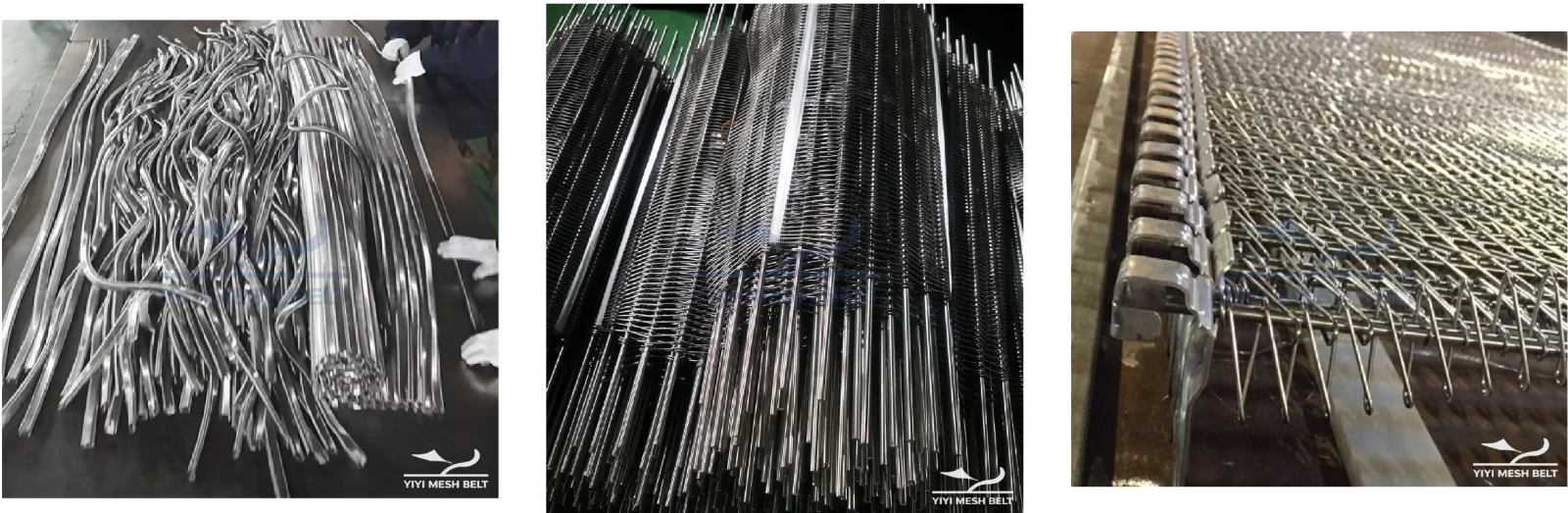
Assembly checks
- Spirals, rods and side plates are assembled to the approved drawing.
- The assembled belt is straightened before welding is finished.
- Weld condition is checked during mass production. Our factory runs 9 automatic welding robots among about 280 production and supporting units.
If you want to see what goes wrong when plates are not controlled, read what causes side plate deformation on a self-stacking belt.
Why build a trial section before mass production?
A trial section turns a drawing into something you can hold and test.
Customized self-stacking belt orders go through trial production and first-article inspection before mass production. We build a short section, check it against the approved drawing, stack it, and send photos or the sample for your confirmation. Only after your approval do we prepare material for the full length.
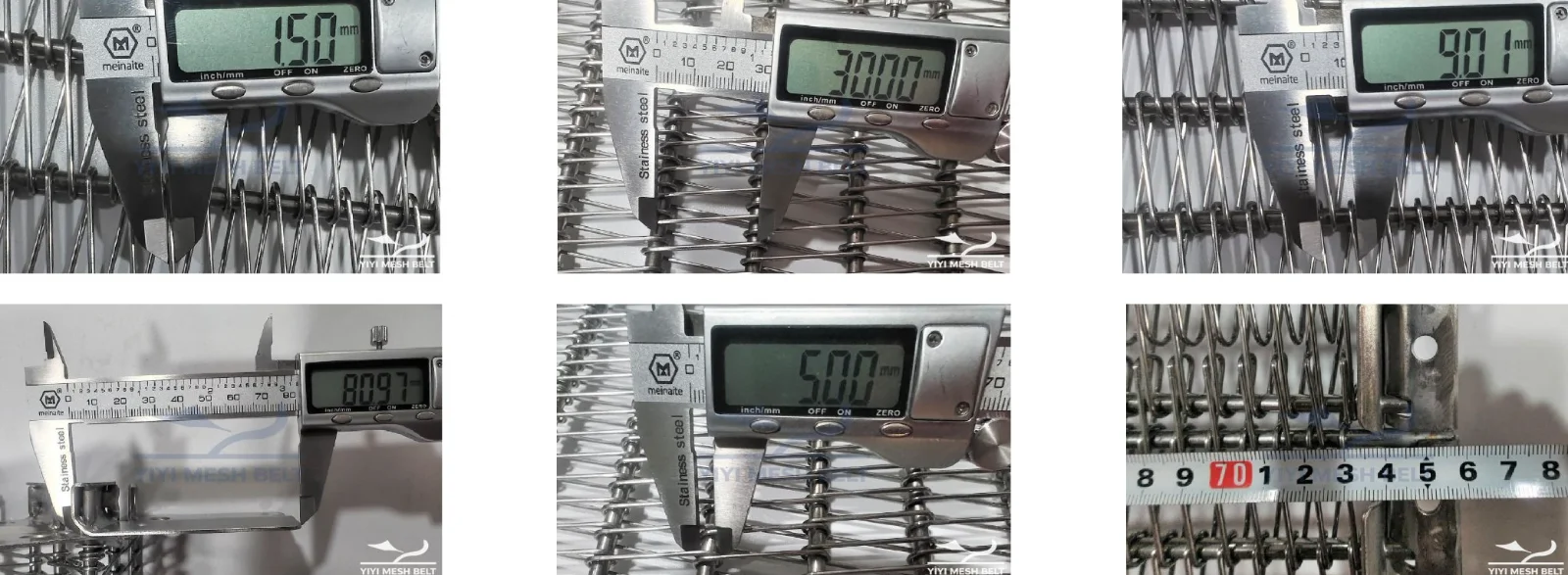
The trial section costs a little time. It saves much more. When you approve a trial section, you approve the real geometry, not a sketch. When we build the full belt, we build it to the section you approved.
Here is how this works in practice. For a project in Pakistan (South Asia), we first made three short same-width sample sections. We kept one as our reference. The customer approved the sample, and only then did we prepare material for the full order. A later repeat order was checked against the sample the customer sent back to us.
For a project in India (South Asia), we made a short test section to the customer's sample. The next order then followed the same data as the test section.
| Step | What happens | Who confirms |
|---|---|---|
| 1. Sample or drawing | We receive your drawing or a section of your current belt | Buyer |
| 2. Trial section | We build a short section to the approved geometry | YIYI production |
| 3. First-article inspection | We check dimensions and stack engagement against the drawing | YIYI quality control |
| 4. Buyer approval | You approve the sample or photos | Buyer |
| 5. Mass production | We build the full length to the approved section | YIYI production |
How is the stack checked before the belt ships?
A self-stacking belt must be checked as a stack, not only as a strip.
Before mass production, we stack adjacent belt layers to verify engagement and check the approved drum geometry. Before packing, every finished belt goes through final inspection: surface condition, edge finish and finished dimensions against the approved specification. Acceptance tolerances are agreed for each project.
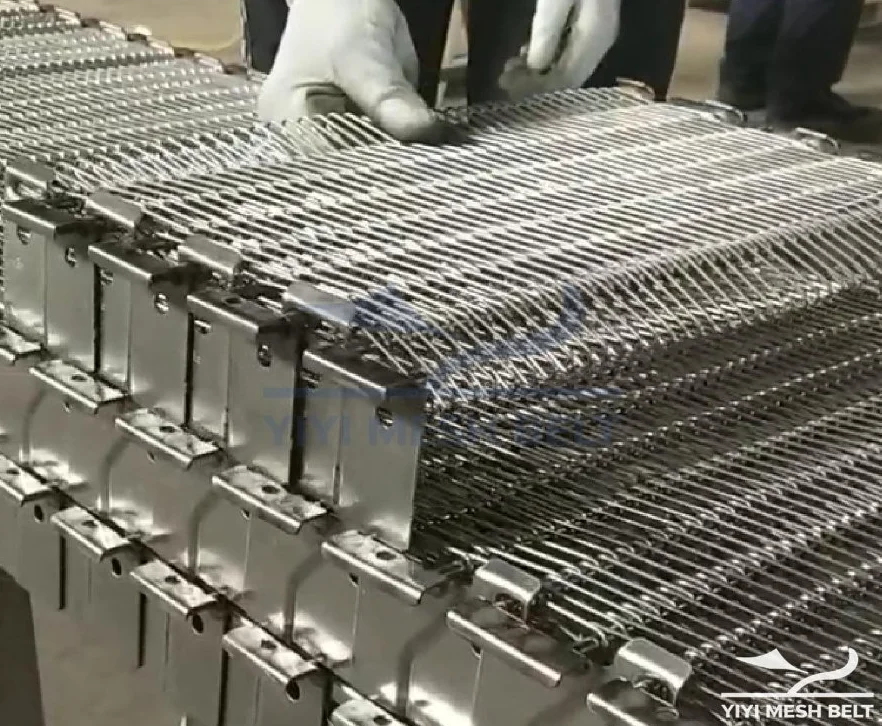
When I visit the workshop, the stack check is the step I watch most closely. We place one layer on another and look at how the side plates engage. We check that the upper layer sits square and does not ride up or slip off. This is the closest we can get to the freezer before the belt leaves the factory.
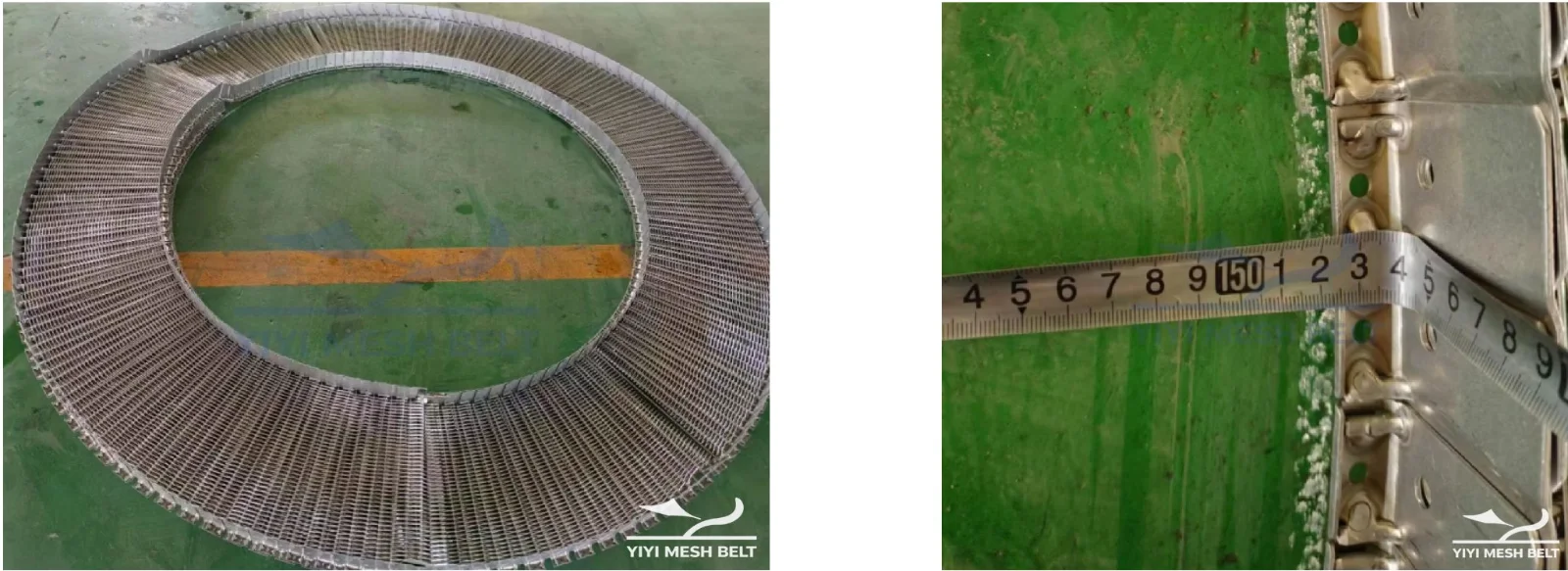
| Inspection item | What we check | When |
|---|---|---|
| Layer engagement | Engagement between adjacent belt layers | Before mass production |
| Drum geometry | Belt geometry against the approved drum or equipment design | Before mass production |
| Surface condition | Surface against the selected material and finish | Final inspection |
| Edge finish | Connection condition, consistency and burrs | Final inspection |
| Finished dimensions | Belt dimensions against the approved specification | Final inspection, before packing |
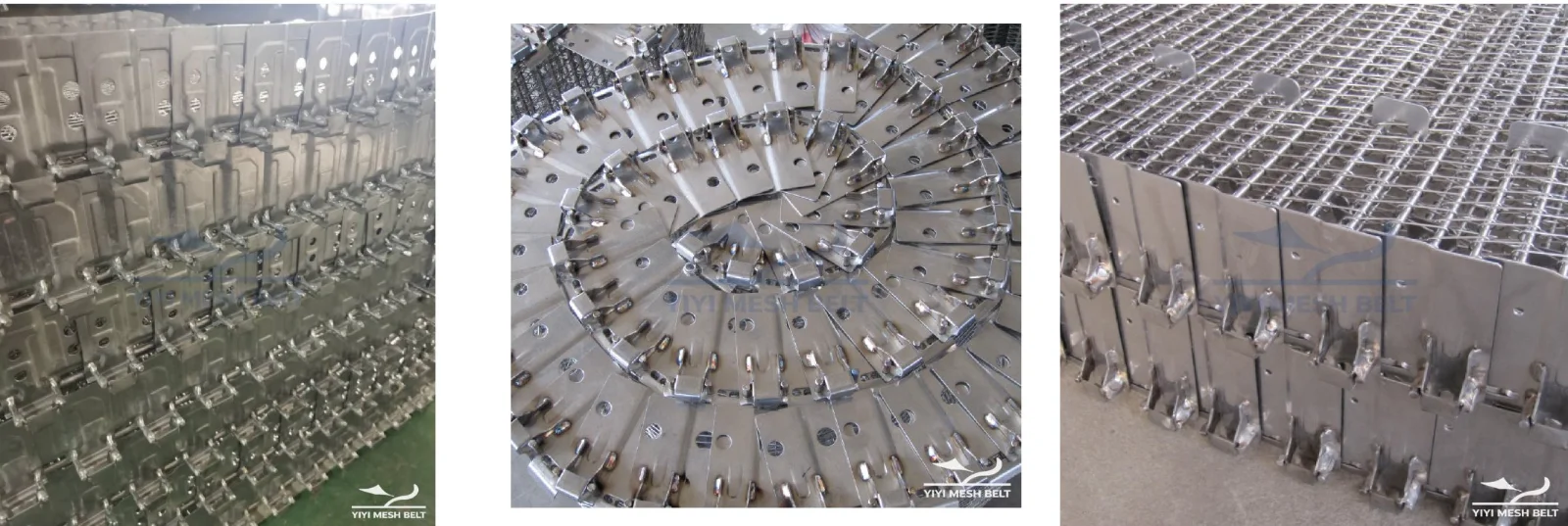
Surface finish is part of this check. Pickling and electropolishing are available, and some surface treatments use external suppliers. You can read more in our metal wire mesh belt surface treatment page.
How is the belt packed and recorded for repeat orders?
The last two stages protect the belt in transit and protect your next order.
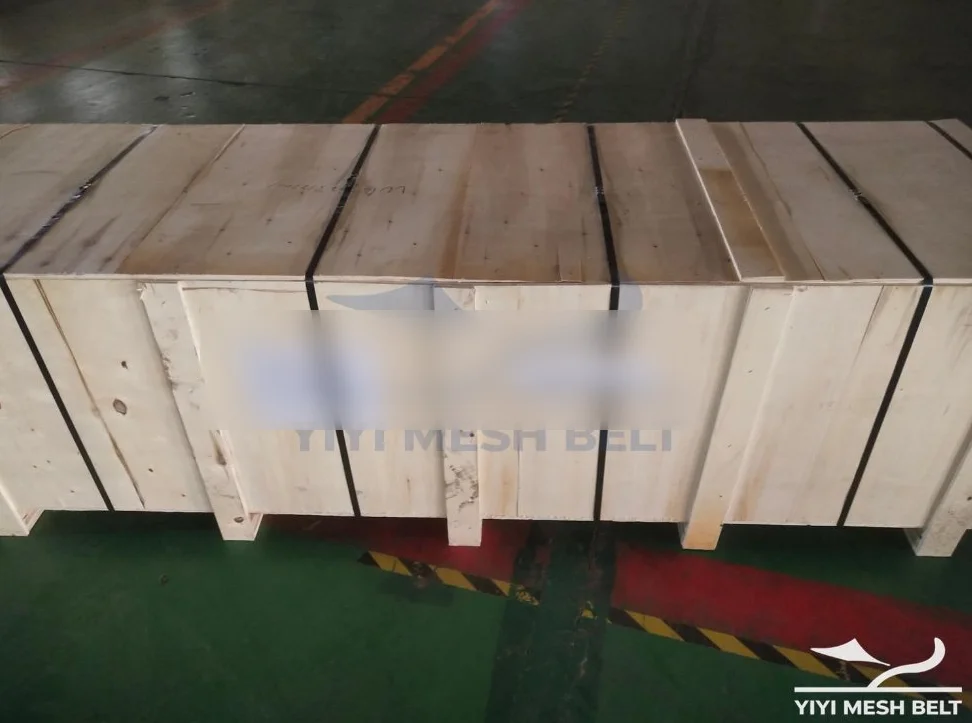
We pack each self-stacking belt with protective wrapping and order identification, then in wooden cases that follow the agreed transport route. We keep the approved drawing, production records, inspection photos and your confirmations, so a repeat order can follow the same data as the last one.
Records matter more for a self-stacking belt than for most belts. Many buyers reorder the same belt for years. When they do, they expect the new belt to stack with the old one. Our production orders for repeat customers refer to the previous order and say "keep the data the same".
| Record | Purpose for the buyer |
|---|---|
| Approved drawing and revision | Keeps the agreed specification for manufacture and reorders |
| Material and production records | Supports order traceability and review of manufacturing history |
| Inspection records and photographs | Lets you review recorded checks against the agreed requirements |
| Customer confirmations | Keeps technical decisions and approved changes on file |
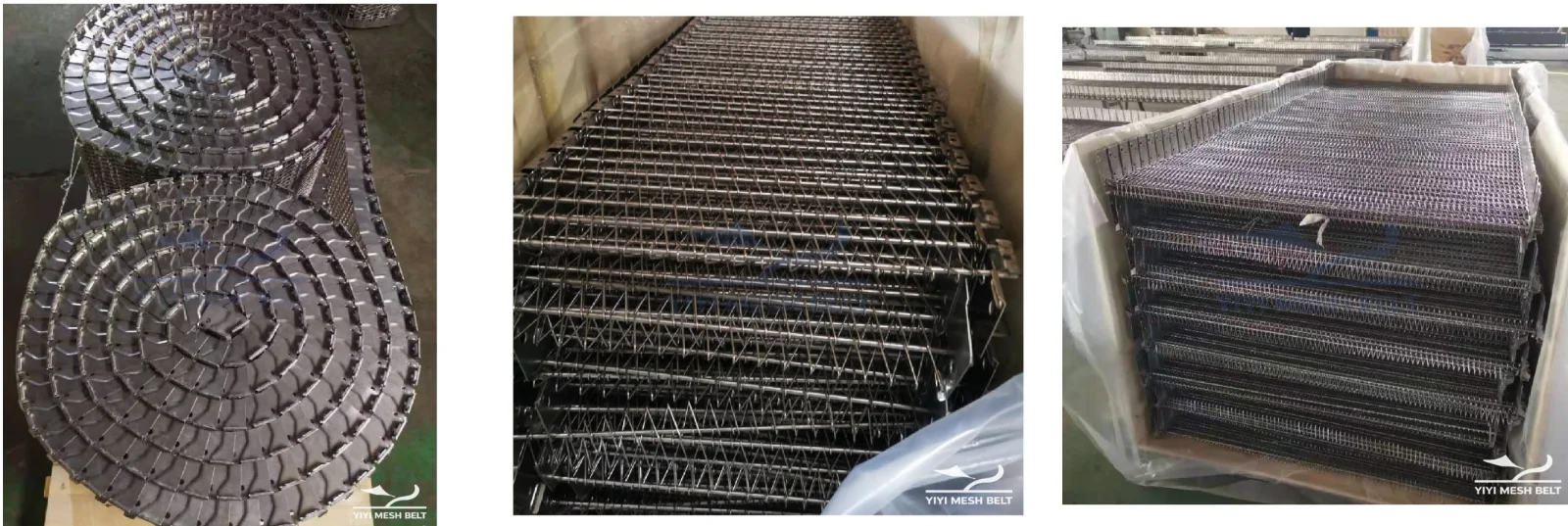
Wooden cases are made by external suppliers to our packing requirements. Packing follows the transport route and destination requirements we agree with you.
When This Is Not the Right Choice
A self-stacking belt is not the answer for every spiral system. If your freezer uses a drum-driven spiral with its own support rails, a Spiral Freezer Belt is usually the right family. A self-stacking belt also needs a confirmed stack geometry. If you cannot share a drawing, a sample section or clear photos, we cannot verify the stack, and we will tell you so before we quote. Choosing a self-stacking belt without that check risks layers that do not seat, which shows up only after installation.
From Our Engineering Experience
The project I think of most is in New Zealand (Oceania). We have made the same self-stacking belt for this customer over several years. Every new production order refers to the previous order number and says to keep the data the same. Before each larger order, we made a trial run for the customer to confirm. We also make an extra short section that we do not weld, so the next belt can be joined to the old one more easily. My advice to buyers is simple: ask your supplier what they keep from your last order. If the answer is "nothing", your next belt is a new belt.
Evidence From Our Work
| Item | Details |
|---|---|
| Situation | A customer in Spain (Europe) needed self-stacking belts made to their own sample, in two widths |
| What we checked | We made sample sections of a few pitches for approval, then a short first order. Engraved first pieces were photographed and confirmed before batch production |
| Why it matters | A sample-based belt has no catalogue drawing to fall back on. The approved sample becomes the standard |
| Result | The customer has reordered repeatedly, and each production order follows the data of the previous one |
| Buyer lesson | Approve a sample once, then ask for every reorder to be built to that approved sample |
You can also see the full production sequence in our Self-Stacking Belt Production and Quality Control document, with photos of each step.
FAQ
How is a custom self-stacking belt order controlled from drawing to shipment?
We follow six stages: drawing approval, trial production, matching verification, mass production, final inspection, and packing with records. Each stage has its own control point, and the approved drawing defines the final configuration and inspection requirements.
Can you make a self-stacking belt from my sample instead of a drawing?
Yes. Send us a sample section or clear photos with key dimensions. We turn the sample into a drawing for your approval, then build a trial section before mass production.
What gap do you keep between the rod and the stack plate?
Our reference rod-to-stack-plate gap is 1–2 mm (0.04–0.08 in). The final value follows your approved drawing and equipment.
Is every finished self-stacking belt inspected before packing?
Yes. Every finished belt goes through final inspection before packing: surface condition, edge finish and finished dimensions against the approved specification.
Can a repeat order match my previous belt?
We keep the approved drawing, production records, inspection photos and your confirmations. Repeat production orders refer to the previous order, so the new belt is built to the same data.
Conclusion
Choose a self-stacking belt by its approved geometry, not its catalogue size. Ask for a trial section and a stack check. Then keep the records for your next order.
Next step: Send us your drawing or a sample section of your current belt for a production review. You can also reach me at info@yiyimeshbelt.com or on WhatsApp at +86 134 5177 3742. Product details: Self-Stacking Belt. Related reading: how to select a self-stacking belt for spiral freezers and why weld cracks appear on self-stacking belt links.
Technical Reviewer: Sunny Ye, Global Sales Director, YIYI Mesh Belt (Ningjin Yiyi Mesh Belt Co., Ltd.) · Last updated: 2026-10-21
© 2026 Ningjin Yiyi Mesh Belt Co., Ltd. All rights reserved. Photos, drawings and data on this page belong to YIYI Mesh Belt and may not be copied or reused without written permission.

