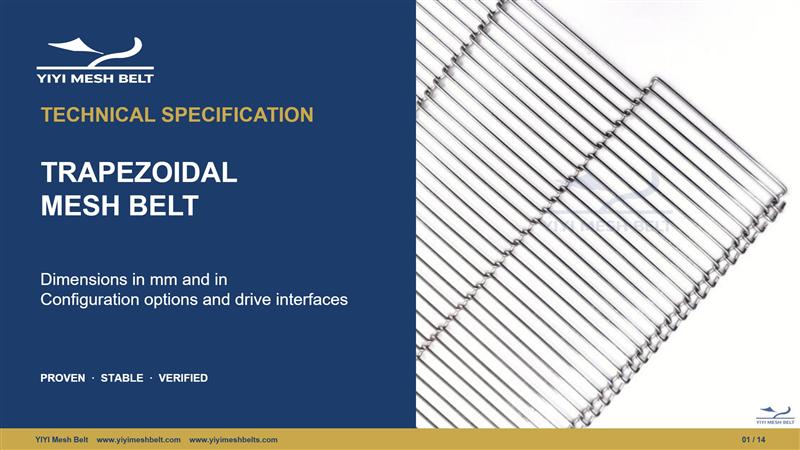
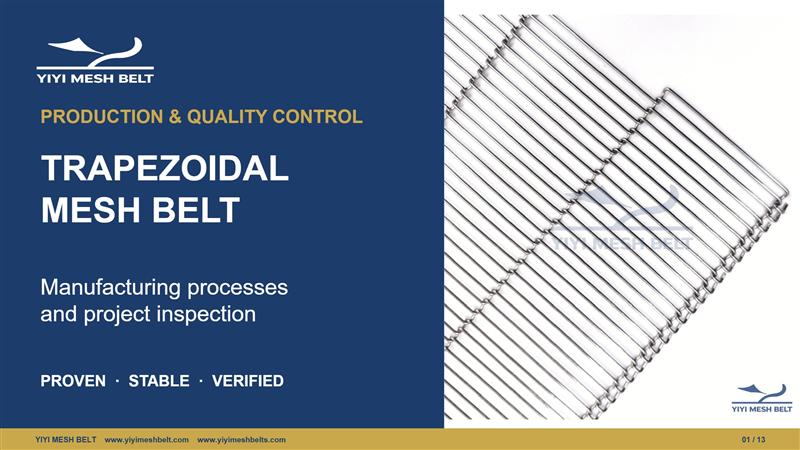
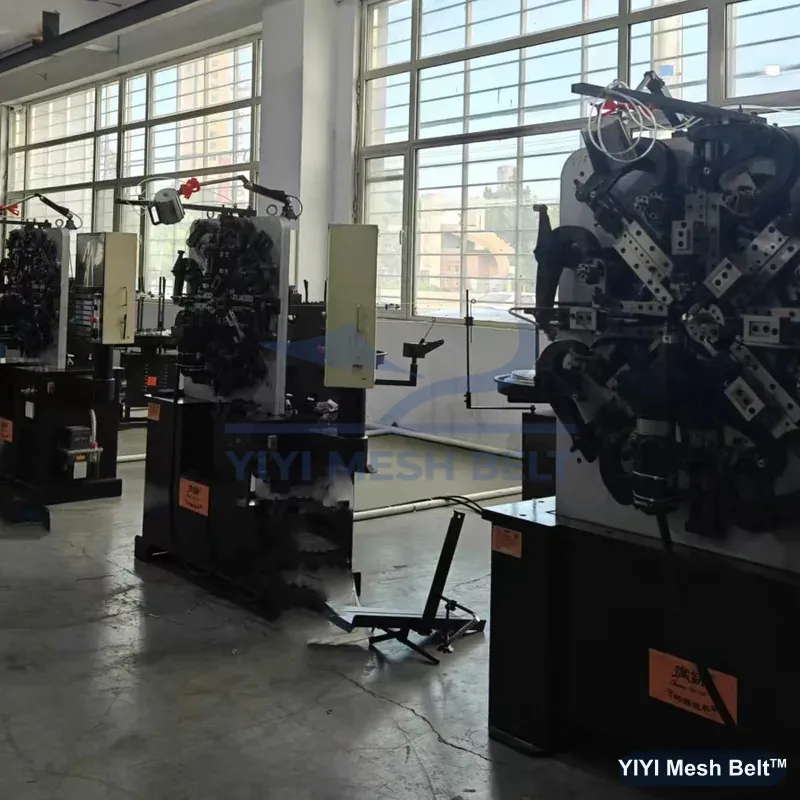
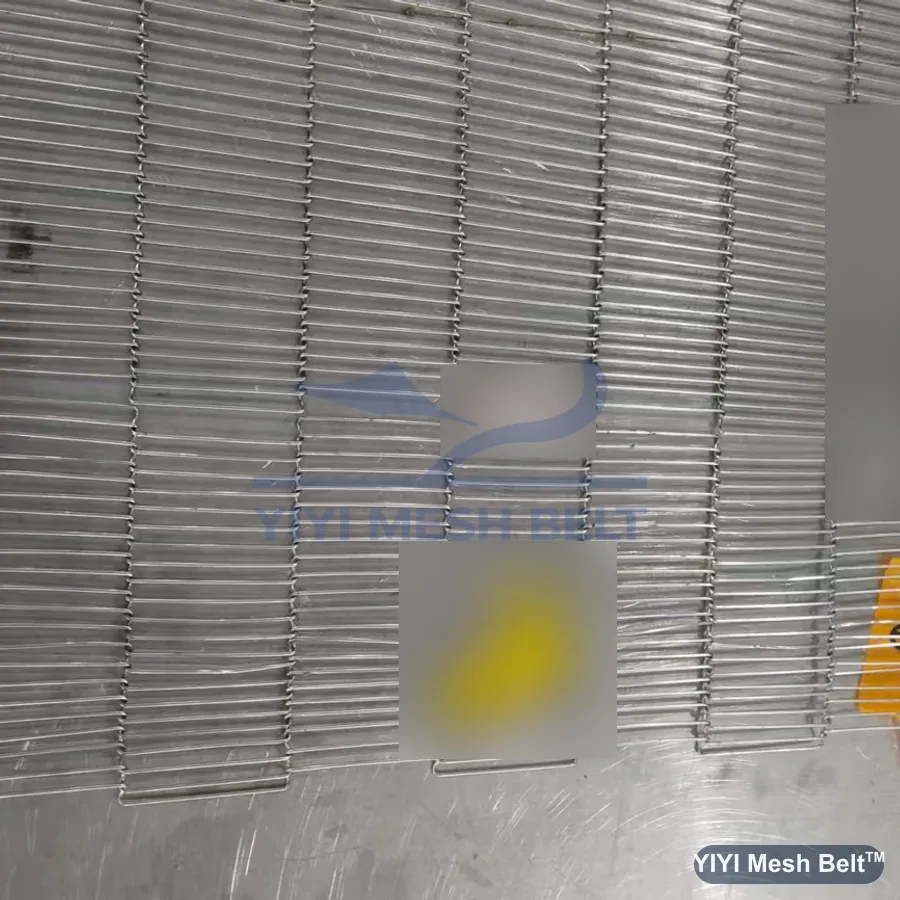
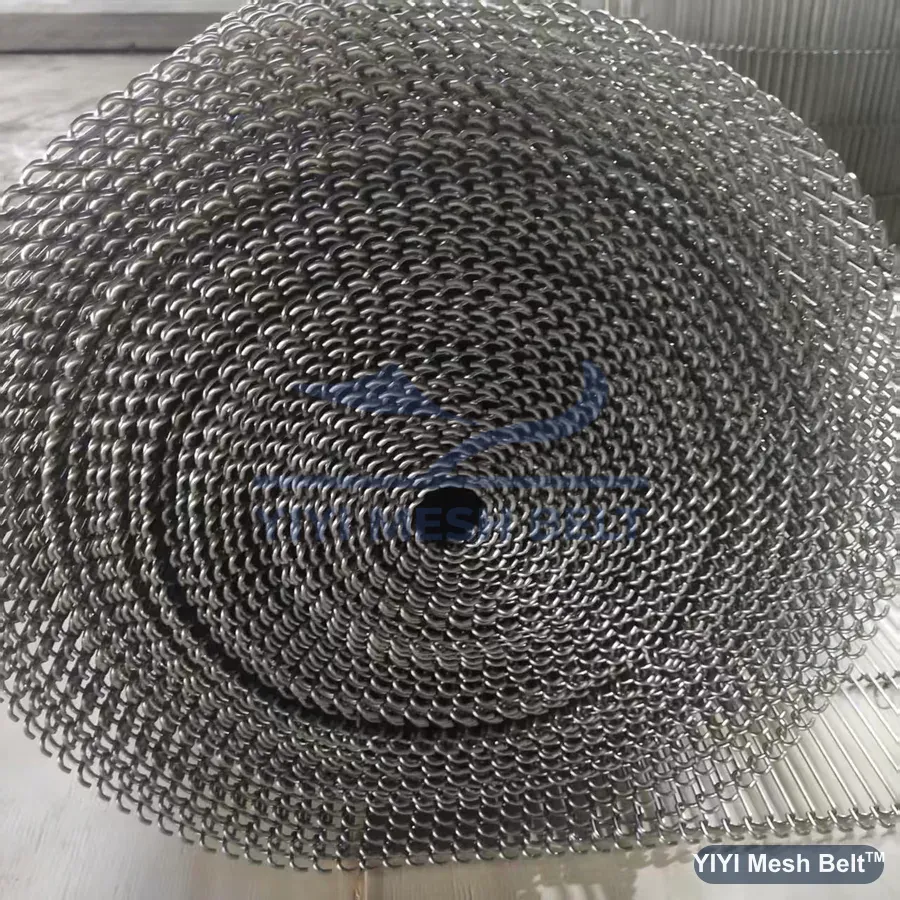
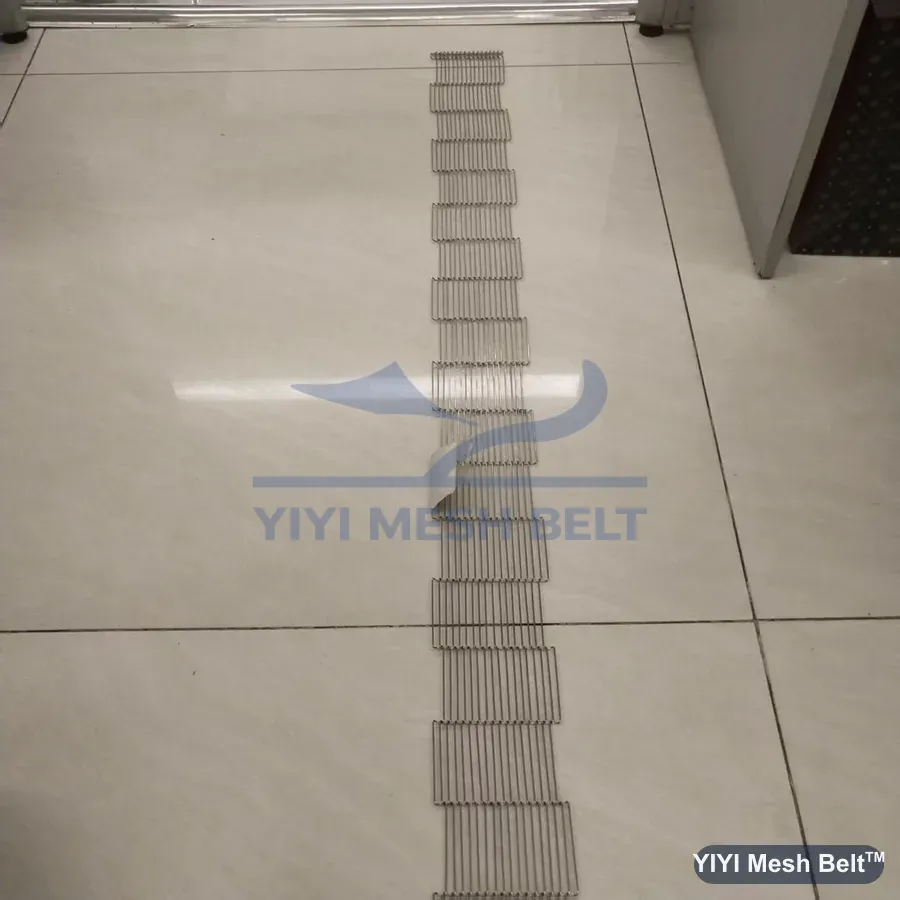
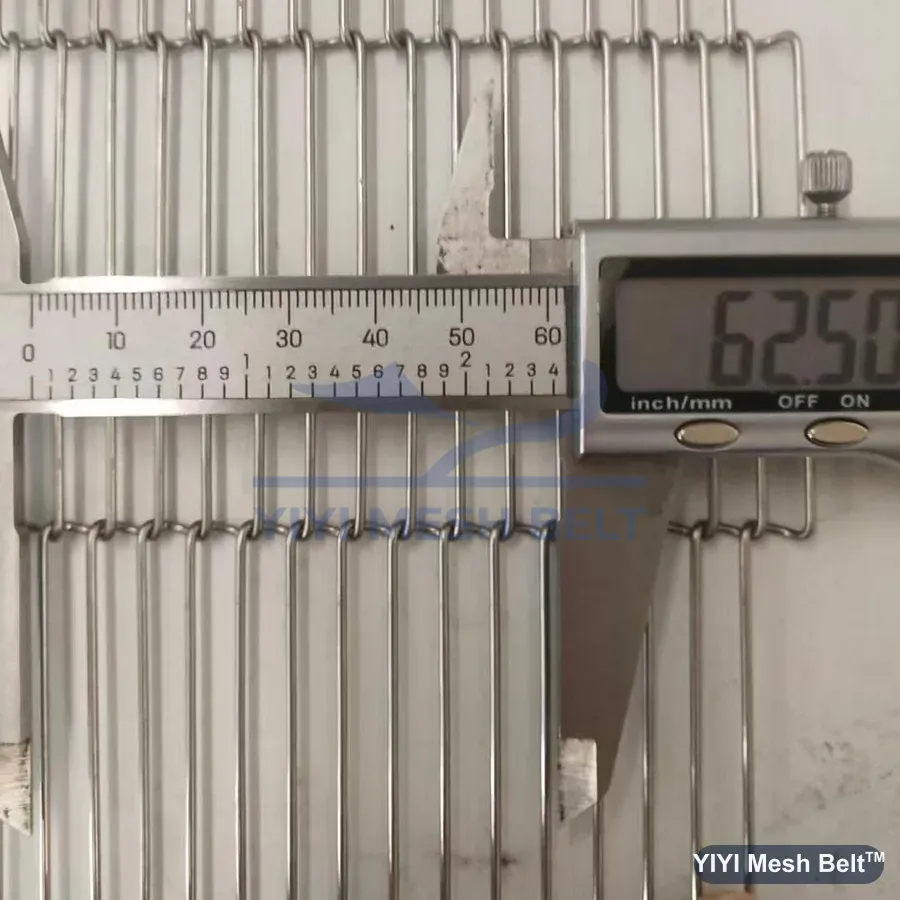
A trapezoidal mesh belt, also called a wire flat belt, is a single-layer wire conveyor belt formed into trapezoid-shaped spaces and usually driven by sprockets. Because we run 15 automatic production machines for this belt, pitch and space count stay consistent from the first metre to the repeat order.
Trapezoidal Mesh Belt documents
Documents from our Document Library: the dimensions and options to compare with your current belt, and how the belt is made and inspected at our factory in Ningjin, Shandong.

Pitch, wire diameter, space count, width and edge define the belt. Buyers also ask for it as an SLE or DLE belt, after its single loop or double loop edge.
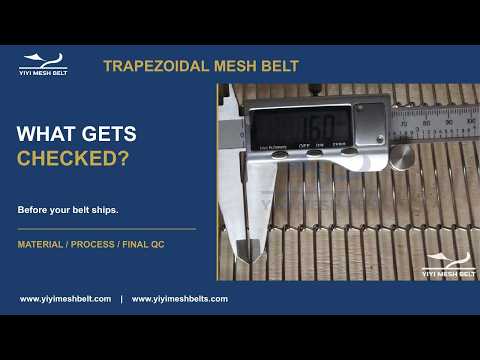
Watch how a trapezoidal mesh belt is made and inspected at our Ningjin factory.
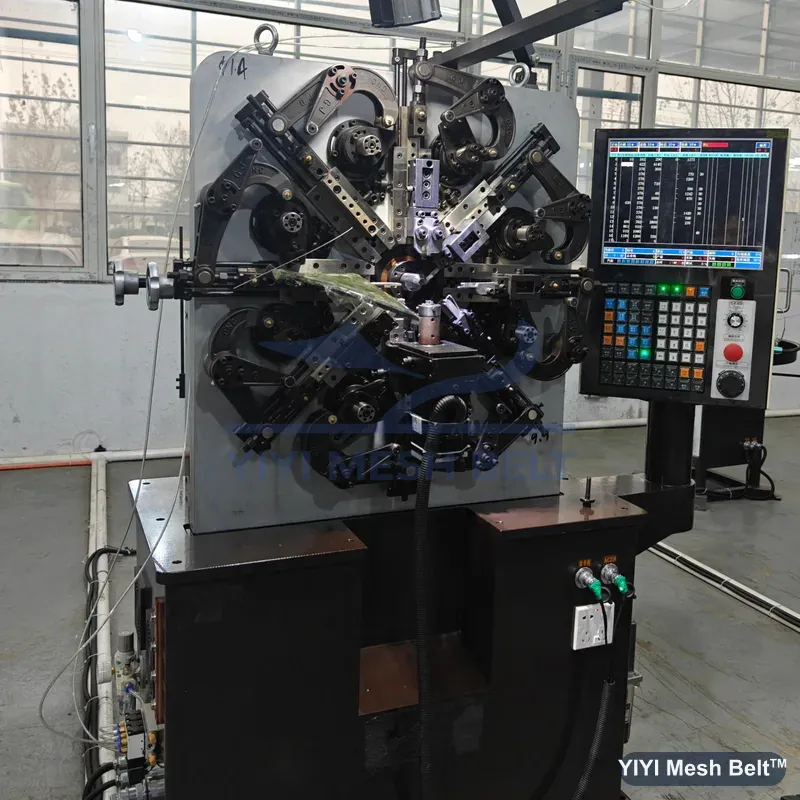
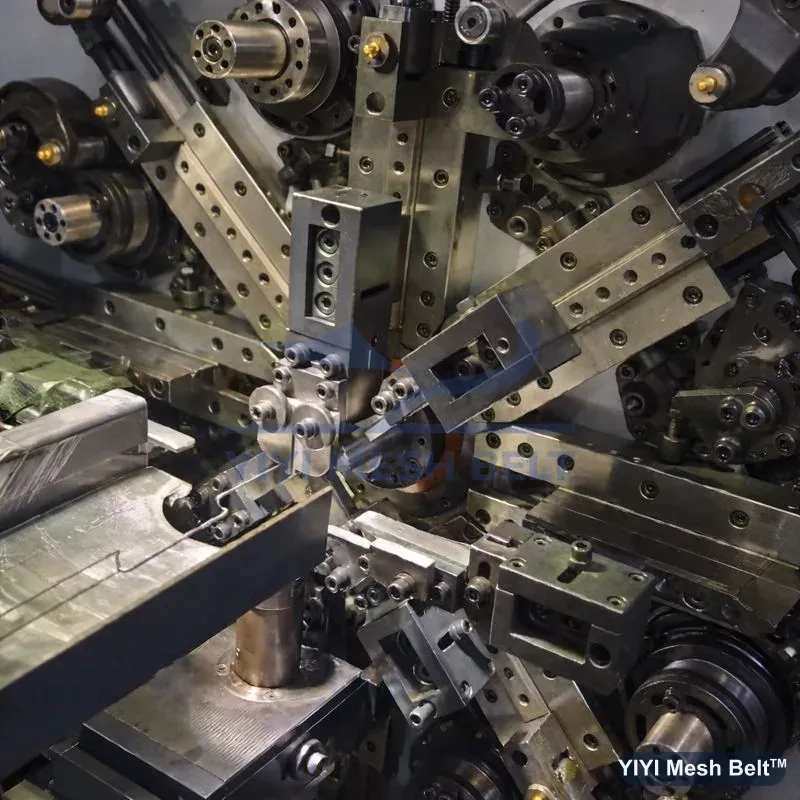
We form trapezoidal mesh belts on 15 dedicated automatic machines in our own workshop. Each cross wire is bent by a programmed forming head, so the programme that made your approved trial section also makes the full order and any repeat order.
Pitch, space count and wire diameter are set on the machine and repeated along the belt. A first article is confirmed before mass production, and every belt receives a 100% final inspection before packing.


| Material | SUS304 or SUS316 |
| Surface | Single-layer wire formed into trapezoid-shaped spaces; pressed or not pressed per project |
| Open area | Set by pitch and number of spaces (3 or more) on the approved drawing |
| Drive | With or without sprockets, per your conveyor |
| Edge options | Single loop edge (SLE) or double loop edge (DLE) |
| Specifications | Pitch 4–23.8 mm; wire 1–2.8 mm; width 76–2352 mm; left-hand and right-hand versions |
| Applications | Food: frying, coating, snack lines |
Reference ranges in mm and inch, not free combinations. The approved drawing sets the final values.
| Parameter | Metric (mm) | Inch (in) |
|---|---|---|
| Material | SUS304 / SUS316 | — |
| Pitch | 4–23.8 mm / custom | 0.157–0.937 in |
| Wire diameter | 1–2.8 mm | 0.039–0.110 in |
| Number of spaces | 3 or more | — |
| Belt width | 76–2352 mm / custom | 2.992–92.60 in |
| Edge | Single loop edge (SLE) / Double loop edge (DLE) | — |
| Pressed / not pressed | Per project | — |
| Sprocket | Required or not required, per drive | — |
| Turning direction | Left-hand / Right-hand | — |

Every option is confirmed on the approved drawing before production.
For curved conveyor sections. Turn direction and radius are confirmed on your approved drawing before production.


Food: frying, coating, snack lines. Suitability depends on belt specification, temperature and equipment design. We confirm it during specification review. See all 15 applications →
Frying. The belt gives a flat surface with open spaces that drain oil. The number of spaces and the pitch decide how small a product it can carry, so we confirm both on your drawing. Read about belts on frying lines.
Coating and enrobing. The belt carries each product under the chocolate curtain and through the bottoming section, and its open structure lets surplus chocolate drain back into the tank. Pitch, wire diameter, space count, edge and drive must suit the enrober. Read about belts on chocolate coating lines.
Snack lines. We build the belt to the pitch, space count and edge shown on the drawing you approve, and confirm suitability during the specification review.
Real photos from our Ningjin factory. Every formal belt passes final inspection against your drawing before packing.


Real orders, with customer details withheld.
Distributor, South Korea. A distributor sent samples of four belts in use at an end user, with no drawings. We measured every sample in our workshop and drew each belt, and the distributor approved the drawings. Trial sections were photographed next to the original samples, and mass production started only after the distributor confirmed the match. The distributor has since re-ordered to the same drawings.
| Belts | 4 specifications |
| Widths | 600 / 580 / 650 / 200 mm |
| Wire | Ø 1.6–2.0 mm |
| Pitch | 7 / 9.8 / 10 / 10.2 mm |
| Spaces | 3 / 7 / 9 |
| Edge | Pressed, 9–11 mm |


Food manufacturer, Middle East. The customer met us at a trade fair and sent a description of the belts. We sent a drawing for each belt, and a trial section was confirmed with the customer before mass production. Every belt was checked by our QC team before shipment.
| Material | SUS304 |
| Widths | 1,050 / 1,300 / 250 mm |
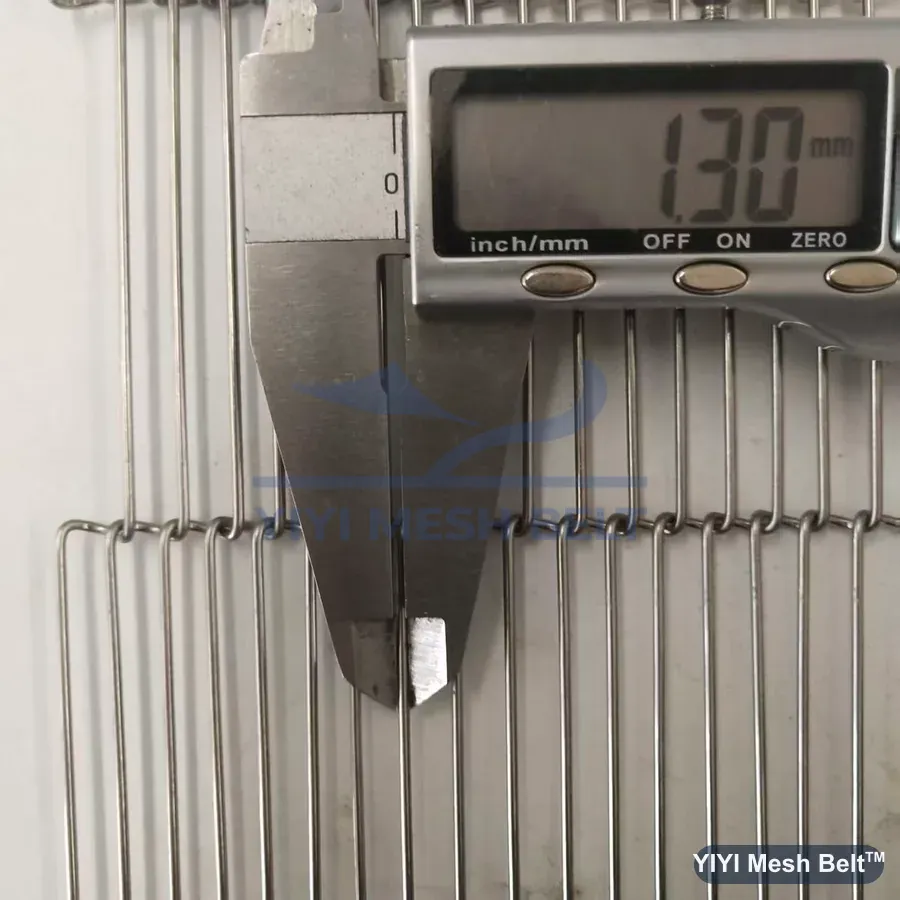
| Wire and pitch | Ø 1.3 mm, pitch 6.25 mm |
| Spaces | 17 / 23 / 3 |
| Edge | Pressed |
| Finish | Degreased, ultrasonically cleaned |


The questions we hear most, answered from how we actually build and check this belt.
Yes. We form it on 15 dedicated automatic machines in our own workshop in Ningjin, Shandong, and we draw our own round bar. You can ask for a video call from the workshop, or visit us.
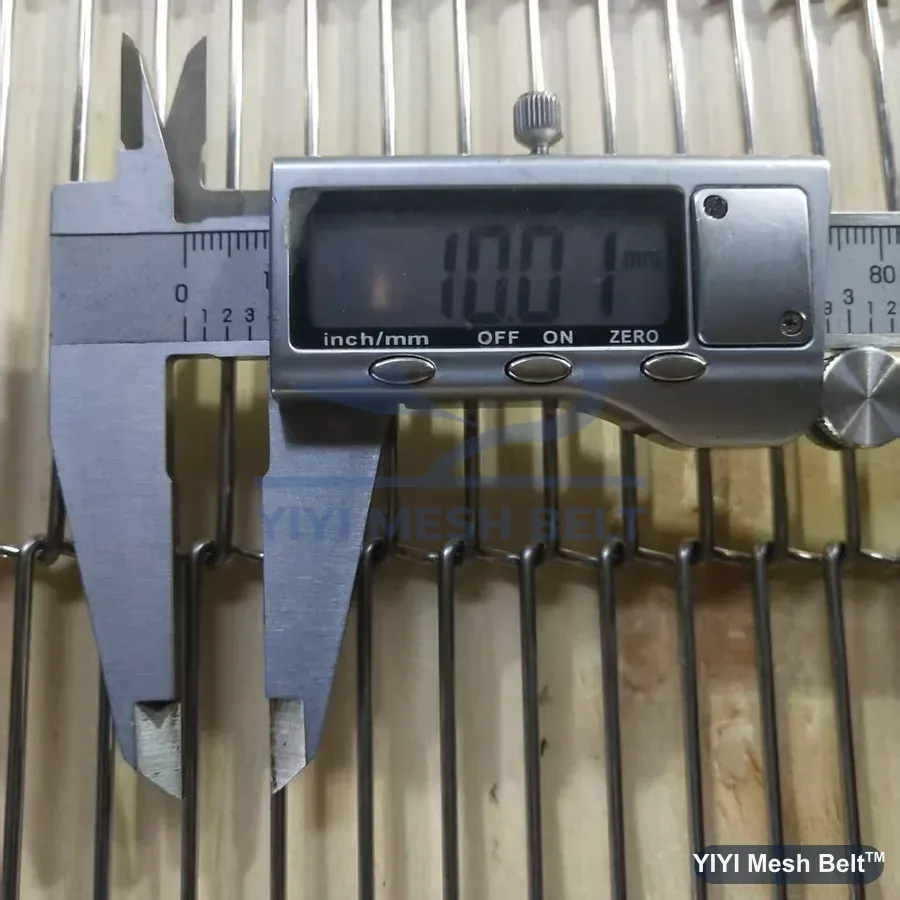
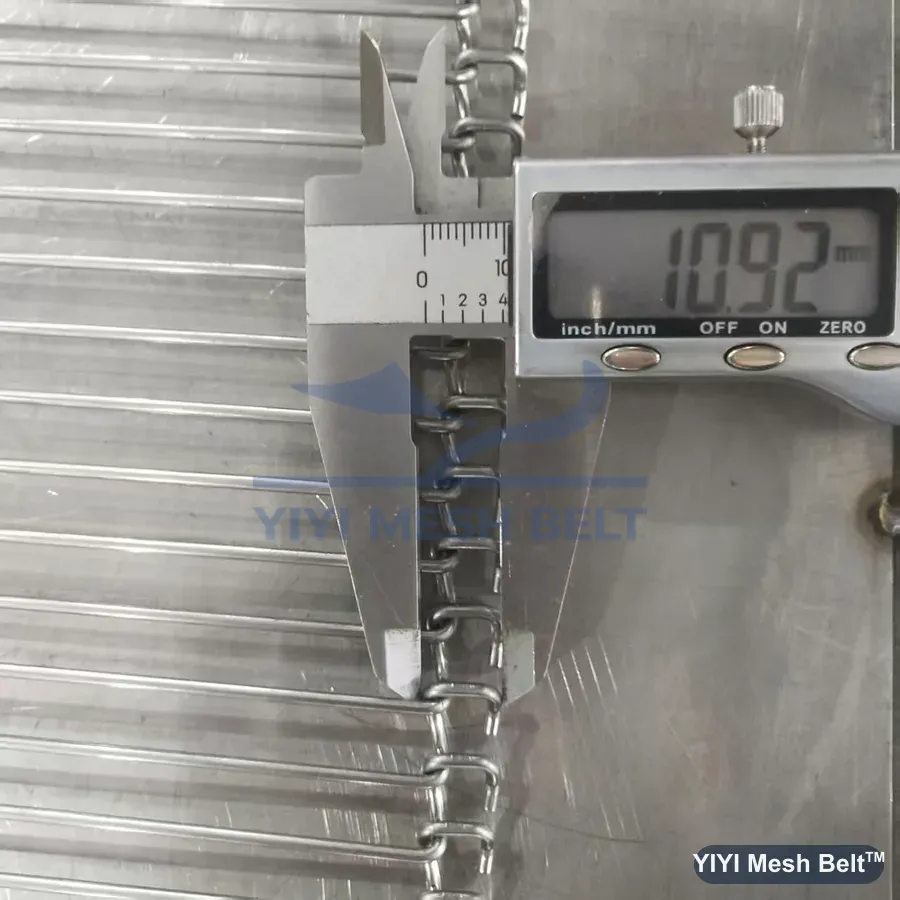
Pitch is set on the machine. We measure it over 10 wires on the trial section and again before shipment, so any variation shows up over a real length and not on a single wire.
Repeat orders are built from the same approved drawing and order records, on the same forming programme. One distributor in South Korea has re-ordered to the same drawings after the first order.
Yes. Send a sample. We count the spaces across the width, measure pitch over 10 wires, draw the belt for your approval, then photograph a trial section next to your sample. Mass production starts only after you confirm the match.
Pressed and unpressed edges look and install differently, so we confirm the edge type from your belt or photos at quotation and show it on the drawing. Edge size and finish are checked along the belt before packing.
We match the sprocket to the belt on the drawing, and sprocket-driven belts are run on their sprocket before shipment. Sprockets are made by specialist partners to our specification, and we check the finished parts.
We draw round bar in-house, and each incoming batch is checked for composition and hardness. Buyers often ask for a mill test report (MTR) or mill test certificate (MTC). Tell us which documents your order needs and we confirm them in the quotation.
Before packing we wipe the belt with a white glove for water and oil and check the full length for production labels. It is packed in waterproof film and plywood or fumigated wooden cases, with an English shipping list, for sea, air or rail.
It does not go to packing. It is recorded, reworked or remade, and inspected again. A 100% final inspection is not a zero-defect or lifetime guarantee, but you see measured photos and the inspection report of your own belt before shipment.
Lead time is confirmed per order in the quotation. Progress updates are agreed for each order, covering material and tooling status.
A structured wire conveyor belt defined by its pitch, wire diameter, number of spaces, width and edge.
Pitch from 4 to 23.8 mm and wire diameter from 1 to 2.8 mm, or to your drawing.
From 76 to 2352 mm, or to your drawing.
Single loop edge (SLE) and double loop edge (DLE).
It depends on your conveyor. Tell us your drive type and we confirm whether sprockets are required.
The belt is produced on our 15 automatic production machines and built from the same approved drawing and order records each time.
Yes. We build turning versions for left-hand and right-hand curves. Turn direction and radius are confirmed on your approved drawing before production.
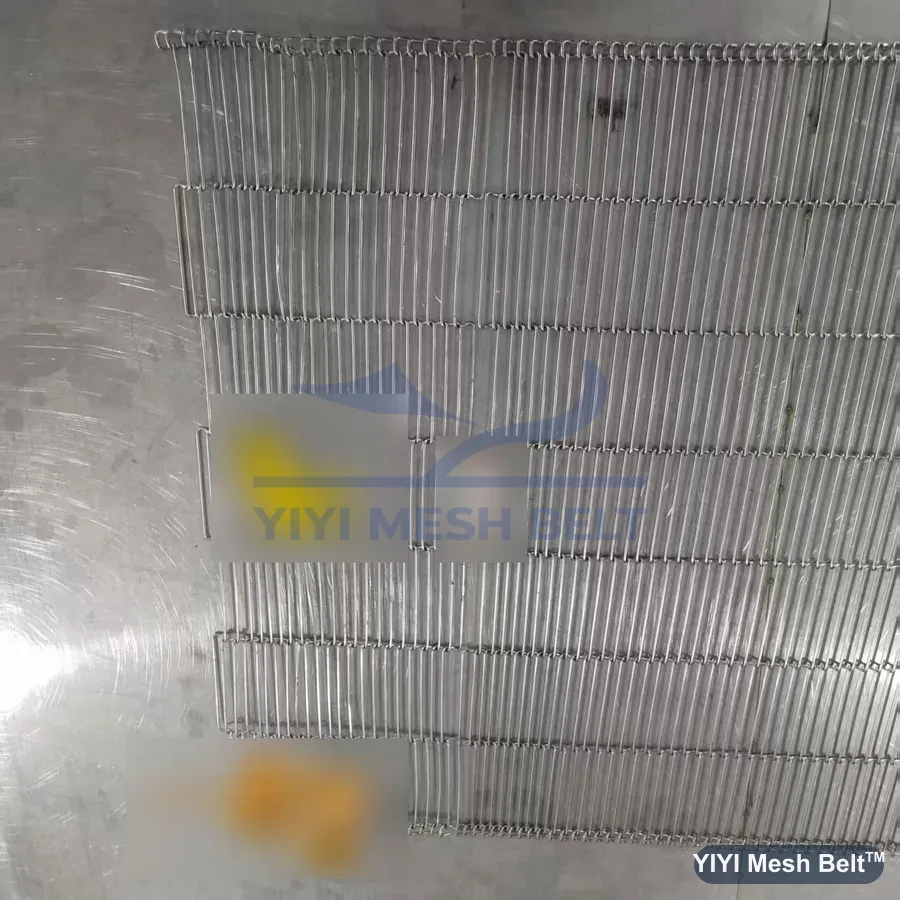
Buyers often ask for a mill test report (MTR) or mill test certificate (MTC). Each incoming batch of wire and rod is checked against steel-mill material documentation, with spectral and hardness testing. Tell us which documents your order needs and we confirm them in the quotation. Read more about material documentation.
Send your drawing, a photo or a worn sample. An engineer reviews it before we quote.
We reply as soon as we see your message, within 8 working hours.
We reply as soon as we see your message, within 8 working hours · No obligation · Your details are used only to reply to you.