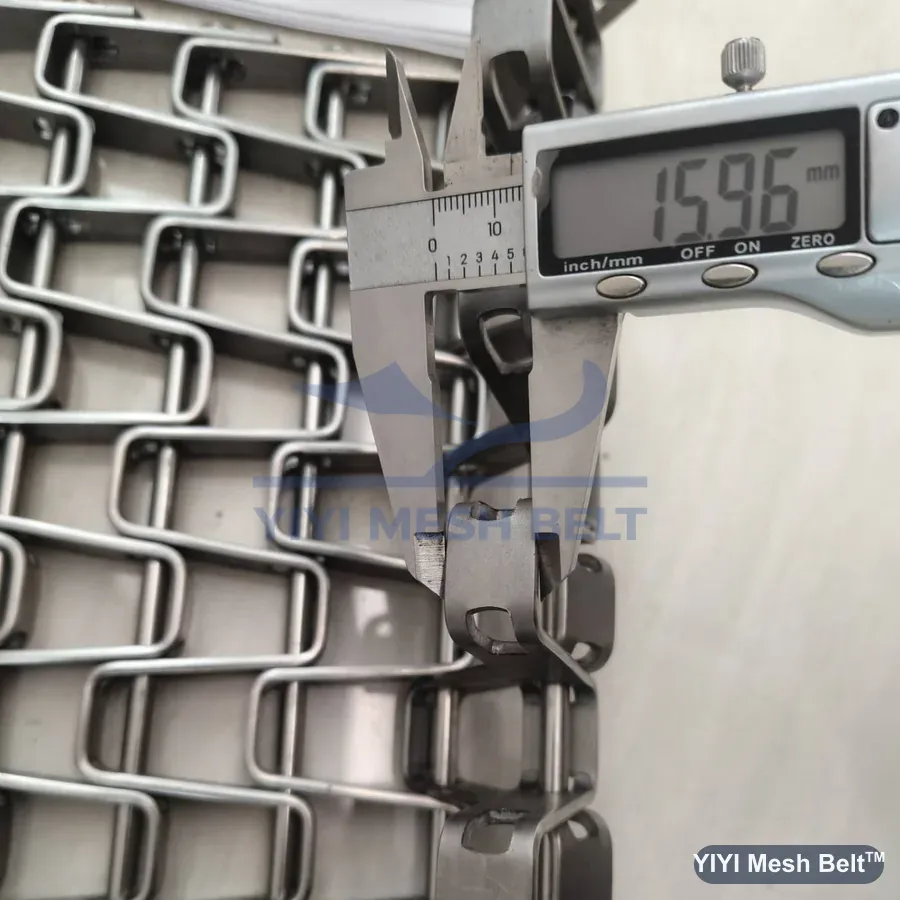
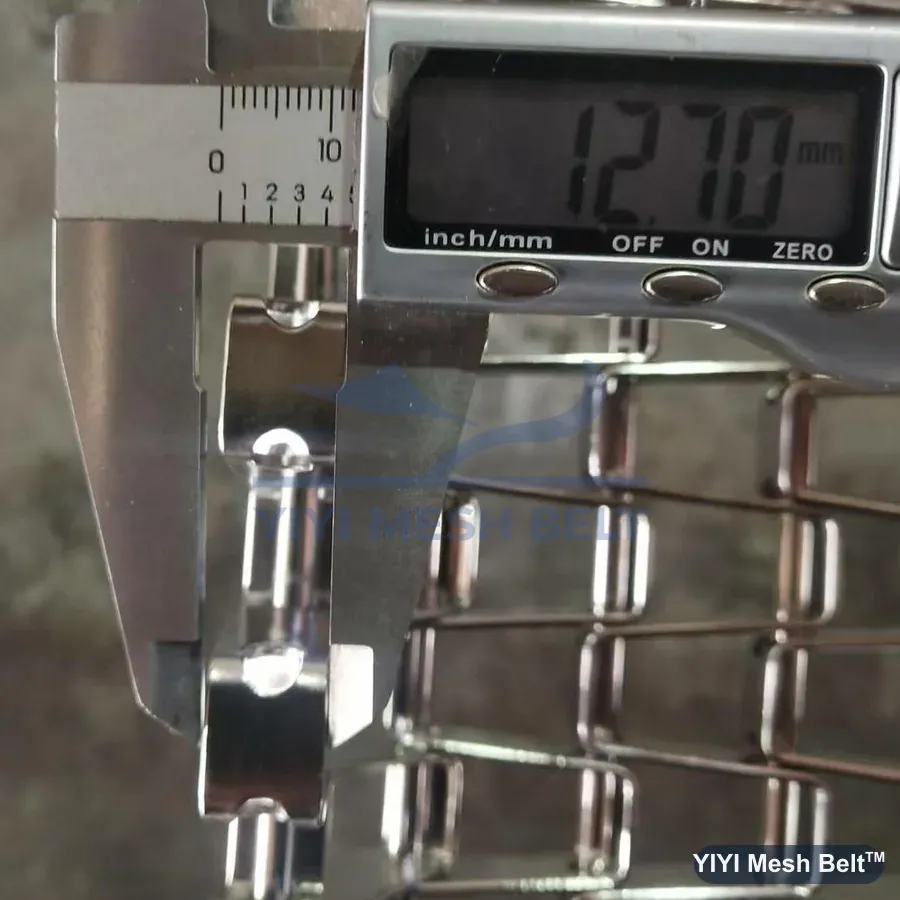
A flat wire (honeycomb) conveyor belt is a metal belt made of flattened strips joined by cross rods and driven by sprockets, used in baking, cooling, drying and washing lines. Its flat carrying surface and large open area let air and water pass through. Because strip section, rod pitch and edge decide how it runs on your sprockets, we build to your drawing and check flatness before packing.
Flat Wire / Honeycomb Belt documents
Documents from our Document Library: the dimensions and options to compare with your current belt, and how the belt is made and inspected at our factory in Ningjin, Shandong.

A flat wire belt is built from flat strips formed into a repeating honeycomb and held together by cross rods. Buyers also call it a honeycomb conveyor belt, a flat wire conveyor belt, a flat wire mesh conveyor belt or flat wire belting. The carrying surface is flat and open, so air and water pass through it. Three things define the belt: the strip section, the rod pitch and the edge.
Watch how a flat wire belt is made and inspected at our Ningjin factory.
| Material | SUS304, SUS316, SUS316L or mild steel, chosen for your process conditions |
| Surface | Flat carrying surface of formed strips |
| Open area | Honeycomb openings let air and water pass through. The opening count is a custom odd number shown on the drawing |
| Drive | Sprockets matched to the rod pitch |
| Edge options | Washer welded, clinched or rod welded |
| Specifications | Mesh pitch 12.7–40 mm; rod pitch 12.7–50.8 mm; rod 3–8 mm; strip 1.2 × 9.5 to 2.8 × 16 mm; width 200–4000 mm |
| Applications | Food: baking, cooling, blanching, snack lines. Industrial: washing and drying lines |

Reference ranges in mm and inch, not free combinations. The approved drawing sets the final values.
| Parameter | Metric (mm) | Inch (in) |
|---|---|---|
| Material | SUS304 / SUS316 / SUS316L / Mild steel | — |
| Belt (flat-wire) pitch | 12.7–40 mm / custom | 0.500–1.575 in |
| Rod pitch | 12.7 / 25.4 / 27.4 / 38.1 / 50.8 mm / custom | 0.500 / 1.000 / 1.079 / 1.500 / 2.000 in |
| Rod diameter | 3 / 4 / 5 / 6 / 8 mm | 0.118 / 0.157 / 0.197 / 0.236 / 0.315 in |
| Flat strip | 1.2×9.5 / 1.2×10 / 1.42×9.4 / 1.6×12 / 1.6×12.7 / 2.8×16 mm | 0.047×0.374 / 0.047×0.394 / 0.056×0.370 / 0.063×0.472 / 0.063×0.500 / 0.110×0.630 in |
| Belt width | 200–4000 mm / custom | 7.874–157.48 in |
| Edge | Washer welded / Clinched / Rod welded | — |
| Surface | Mill / Pickling / Electropolishing | — |

| Strip section (mm) | Strip section (in) |
|---|---|
| 1.2 × 9.5 | 0.047 × 0.374 |
| 1.2 × 10 | 0.047 × 0.394 |
| 1.42 × 9.4 | 0.056 × 0.370 |
| 1.6 × 12 | 0.063 × 0.472 |
| 1.6 × 12.7 | 0.063 × 0.500 |
| 2.8 × 16 | 0.110 × 0.630 |
These are reference sections, not free combinations with every pitch. The approved drawing sets the final strip, pitch and rod.
Not sure which section you have? Send a drawing or your current belt and we confirm it before quoting.
For heavier service we build with the larger sections in our range. We do not publish a rated load: strip, rod and drive are confirmed for your product and equipment on the approved drawing.
| Flat strip | Up to 2.8 × 16 mm (0.110 × 0.630 in) |
| Cross rod | 6 or 8 mm (0.236 or 0.315 in) |
| Rod pitch | 38.1 or 50.8 mm (1.500 or 2.000 in) |
| Width | Up to 4000 mm (157.48 in) |
| Accessories | Side guards or center flights, to the project drawing |
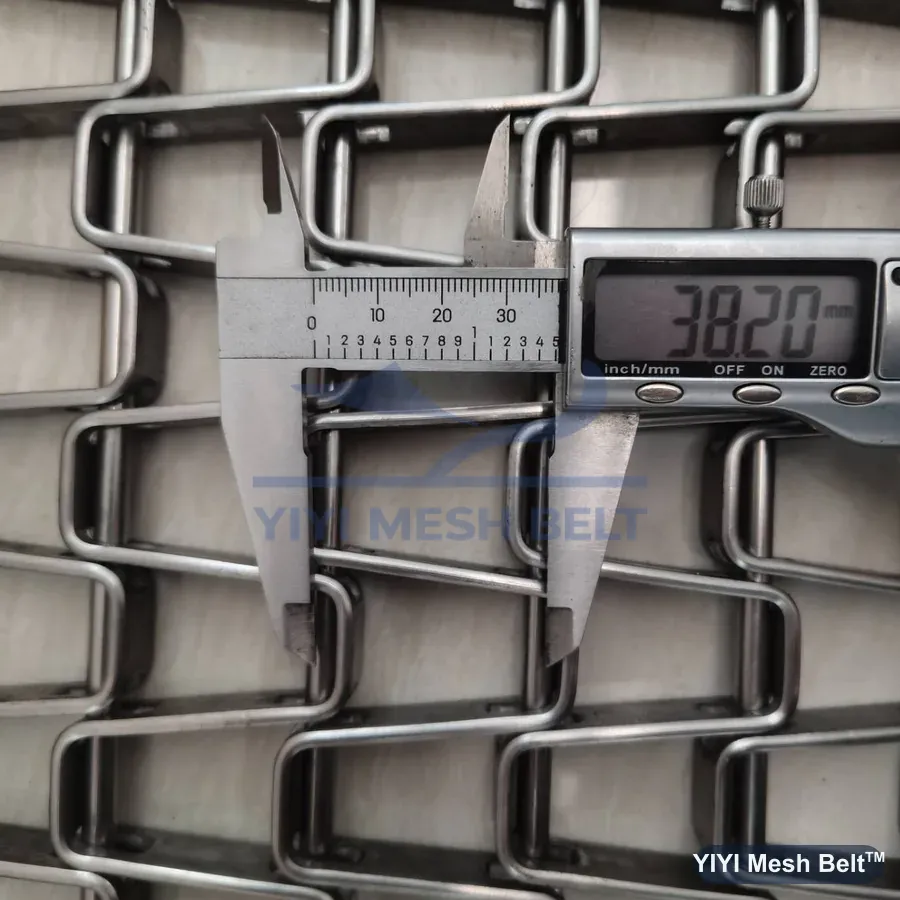
One recent order used 2.8 × 16 mm strip with a 6 mm rod at 38.2 mm rod pitch, on a 982 mm belt with new forming tooling.
We build three edge types: washer welded, clinched and rod welded. The edge is confirmed on your approved drawing. The belt is driven by sprockets matched to its rod pitch, in SUS304, SUS316, nylon, UHMWPE or POM. Sprockets are made by specialist partners to our specification, and we check the finished parts.
Every option is confirmed on the approved drawing before production.


Food: baking, cooling, blanching and snack lines. Industrial: washing and drying lines. Suitability depends on belt specification, temperature and equipment design. We confirm it during specification review. See all 15 applications →
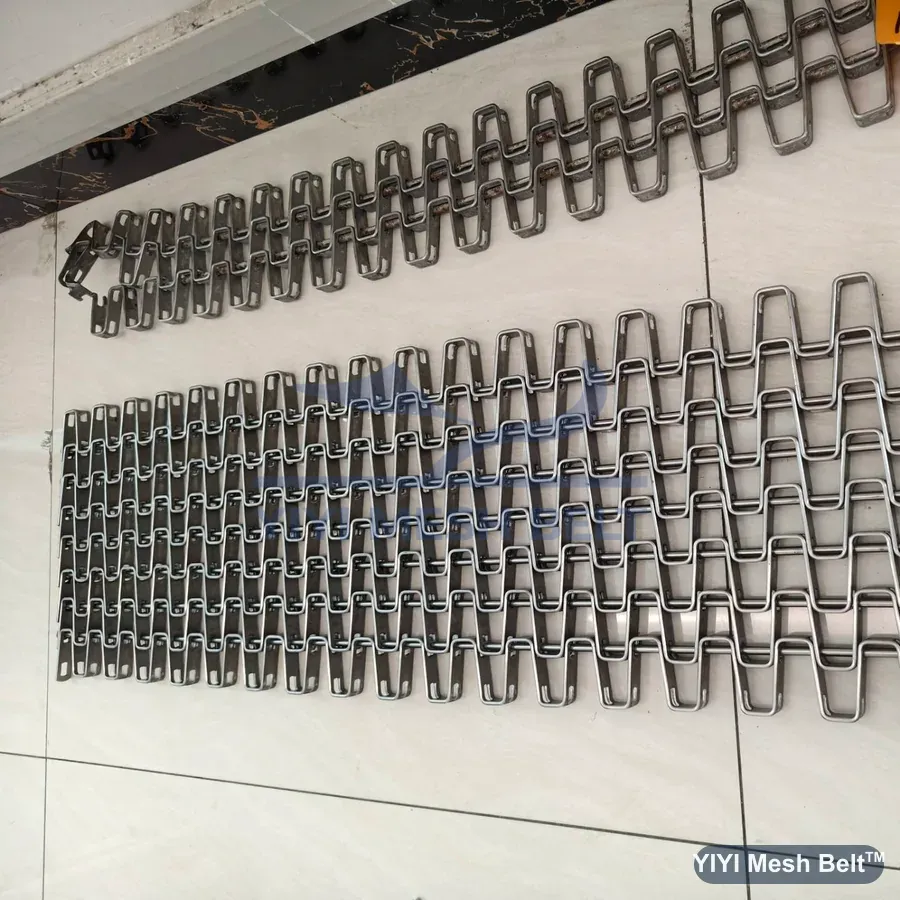
Real photos from our Ningjin factory. Every formal belt passes final inspection against your drawing before packing.


A flat wire belt can look right and still run badly. Before packing we check the points that decide how it runs: flatness, inner strip scratches, gaps at corners and joints, the rod relationship and the edge. These checks are made against the approved drawing and the agreed sample. We do not publish one universal limit for scratches or joint gaps, because the right limit depends on your product and line.
Spares built to the same drawing. Cross rods, flat strips and washers can be supplied to the drawing of your belt; sprockets are matched per project.
Reproducing a belt you already run. We measure your old belt or sample, prepare a drawing for your approval, build a trial section and confirm the first article before the full length is made.
Real orders, with customer details withheld.
Distributor, Southeast Asia. A distributor sent photos and a sample of the end user’s worn belt. We drew the belt, confirmed the specification with the distributor and made new forming tooling. A trial section was photographed next to the original sample, and mass production started only after the distributor confirmed.
| Material | SUS304 |
| Width | 982 mm, 37 openings |
| Rod pitch | 38.2 mm |
| Mesh pitch | ≈ 26 mm |
| Flat strip | 2.8 × 16 mm |
| Cross rod | Ø 6 mm, washer welded |


Equipment maker, East Asia. We met this customer at a fisheries trade fair. After quality problems with a previous supplier they were concerned about material and rust, so we sent samples first. After the samples were approved we checked the sprockets against the belt, and the customer inspected the first-article samples at our factory before mass production.
| Material and finish | SUS304, electropolished, welds cleaned |
| Widths | 600 / 800 mm, 31 / 43 spaces |
| Pitch | Rod pitch 27.4 mm, mesh ≈ 18.8 mm |
| Flat strip | 1.6 × 12.7 mm |
| Cross rod | Ø 5 mm, 3 mm washers welded |


The questions we hear most, answered from how we actually build and check this belt.
Yes. Flat strip is checked and punched on our own presses in Ningjin, Shandong, and first pieces are checked before the batch runs. Strip thickness is measured with a micrometer and rod diameter with a caliper.
Uneven strip forming or rods cut to different lengths can stop a belt lying flat, so we check flatness on the inspection table before packing.
We check the inside of the strips by eye and touch before shipment, and corner joints are checked along the belt and kept as small as the design allows.
Mesh pitch, rod pitch and the number of openings are confirmed from your drawing or sample before quoting. A trial section is compared with your original, and mass production starts only after you confirm.
Sprockets are made to the rod pitch on your drawing, and the belt runs over a matched sprocket before shipment when both are supplied. Sprockets are made by specialist partners to our specification, and we check the finished parts.
Every edge joint is checked and burrs are removed before packing.
We draw wire and round bar in-house, and each incoming batch is checked for composition and hardness. Buyers often ask for a mill test report (MTR) or mill test certificate (MTC). Tell us which documents your order needs and we confirm them in the quotation.
Clean and dry, in waterproof film and plywood or fumigated wooden cases, with an English shipping list, for sea, air or rail.
It does not go to packing. It is recorded, reworked or remade, and inspected again. A 100% final inspection is not a zero-defect or lifetime guarantee, but you see measured photos and the inspection report of your own belt before shipment.
Lead time is confirmed per order in the quotation. Progress updates are agreed for each order, covering material and tooling status.
A conveyor belt made of flat stainless or mild steel strips joined by cross rods, forming a flat, open honeycomb surface. It is also called a honeycomb belt.
Common flat strip sections are 1.2×9.5, 1.2×10, 1.42×9.4, 1.6×12, 1.6×12.7 and 2.8×16 mm.
From 200 to 4000 mm, or to your drawing.
Washer welded, clinched or rod welded edges.
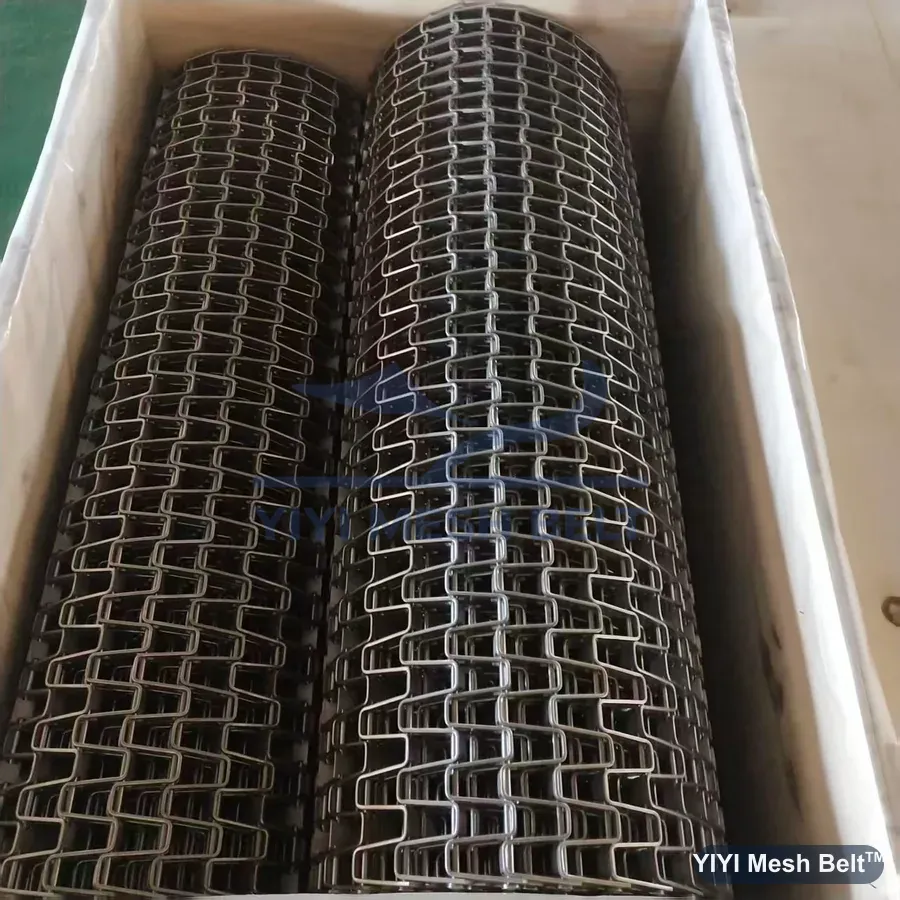
Yes. Cross rods, flat strips and washers can be supplied to the same drawing; sprockets are matched per project.
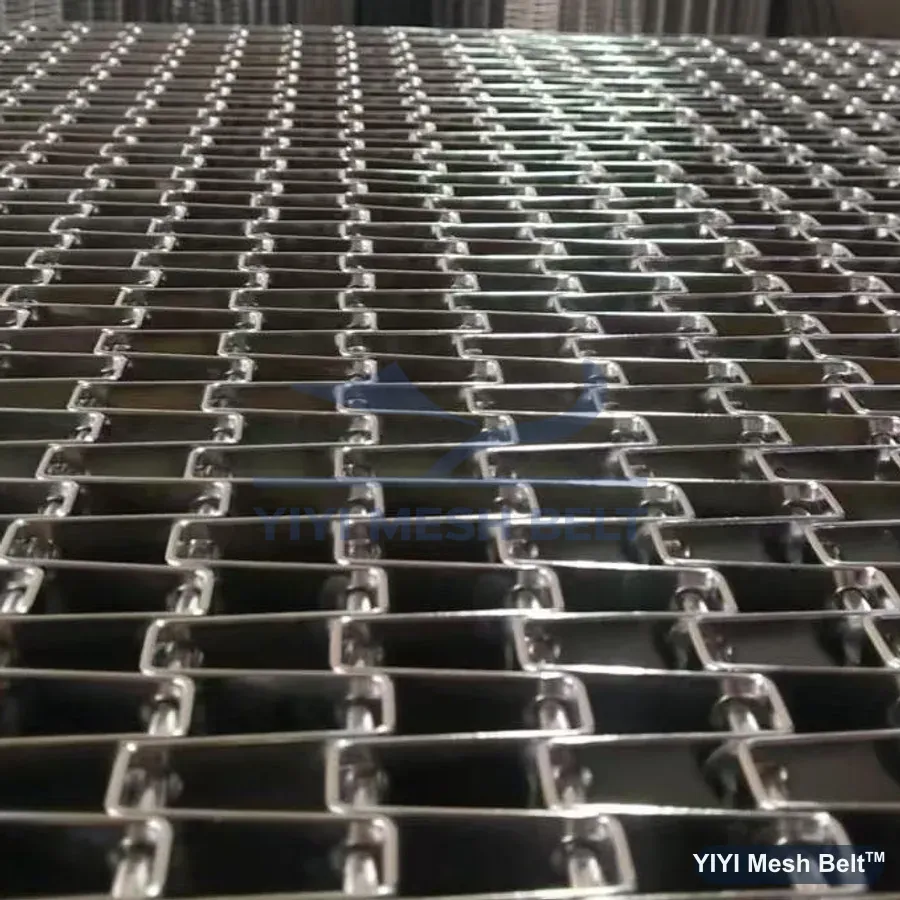
Yes. Third-party inspection is supported on request, and customer factory visits are welcome.
Buyers often ask for a mill test report (MTR) or mill test certificate (MTC). Each incoming batch of wire and rod is checked against steel-mill material documentation, with spectral and hardness testing. Tell us which documents your order needs and we confirm them in the quotation. Read more about material documentation.
Send your drawing, a photo or a worn sample. An engineer reviews it before we quote.
We reply as soon as we see your message, within 8 working hours.
We reply as soon as we see your message, within 8 working hours · No obligation · Your details are used only to reply to you.