
A self-stacking belt starts as wire and round bar. If the material is wrong at that point, no later inspection can put it right. So the check comes first.
We check every batch of wire and rod with spectral and hardness testing before it is used. Spectral testing confirms the chromium and nickel content. Material that fails either check goes back to the supplier and is not used for orders. Wire and rod diameters are then measured against the approved drawing.
I am Sunny Ye, Global Sales Director at YIYI Mesh Belt (Ningjin Yiyi Mesh Belt Co., Ltd.). This article covers what we do with wire and rod in our factory in Ningjin, before they become a belt. It does not cover how to choose a grade. For that question, see SUS304 or SUS316 for a self-stacking belt.
Which checks does wire and rod go through?
Wire and rod go through a material check and a size check. The material check uses alloy composition screening and hardness testing on every batch, and tensile testing equipment is available. The size check compares wire and rod diameters with the approved specification, in mm and in.
| Check | What it looks at | Against | Result |
|---|---|---|---|
| Alloy composition screening | Mainly chromium and nickel content | Ordered stainless steel grade | Returned, not used for orders |
| Hardness testing | Hardness of the batch | Agreed criteria | Returned, not used for orders |
| Tensile testing | Equipment available; applied as agreed for the project | Agreed criteria | Confirmed for each project |
| Wire diameter | Measured with a caliper | Approved drawing | Checked against the agreed tolerance |
| Rod diameter | Measured with a caliper | Approved drawing | Checked against the agreed tolerance |
Test methods, acceptance criteria and tolerances are agreed for each project. The approved drawing governs.
What happens when a batch fails?
It goes back. If the spectral check or the hardness check fails, we return the material, whether it is wire or rod. Material that fails either check is not used for order production. The buyer does not need to ask for this. It is how we treat every batch.
Which wire and rod sizes do we measure on a real order?
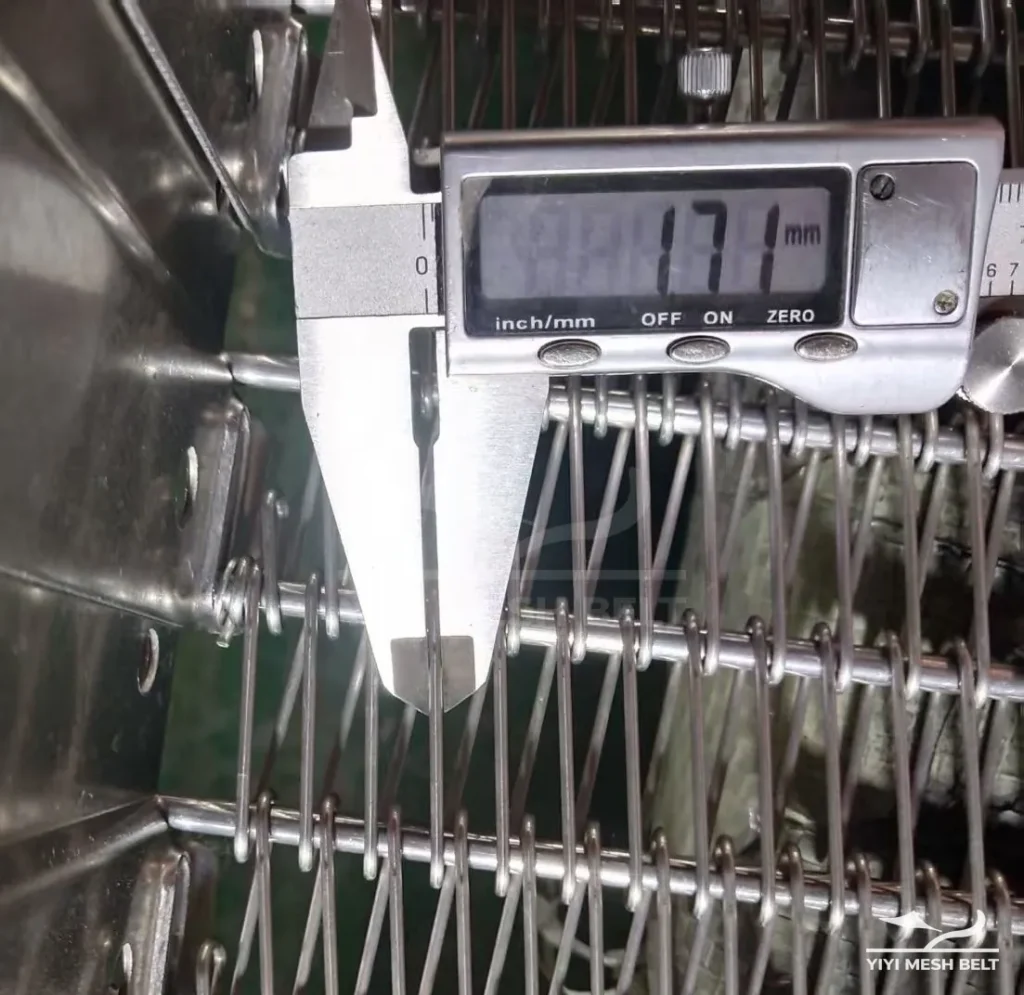
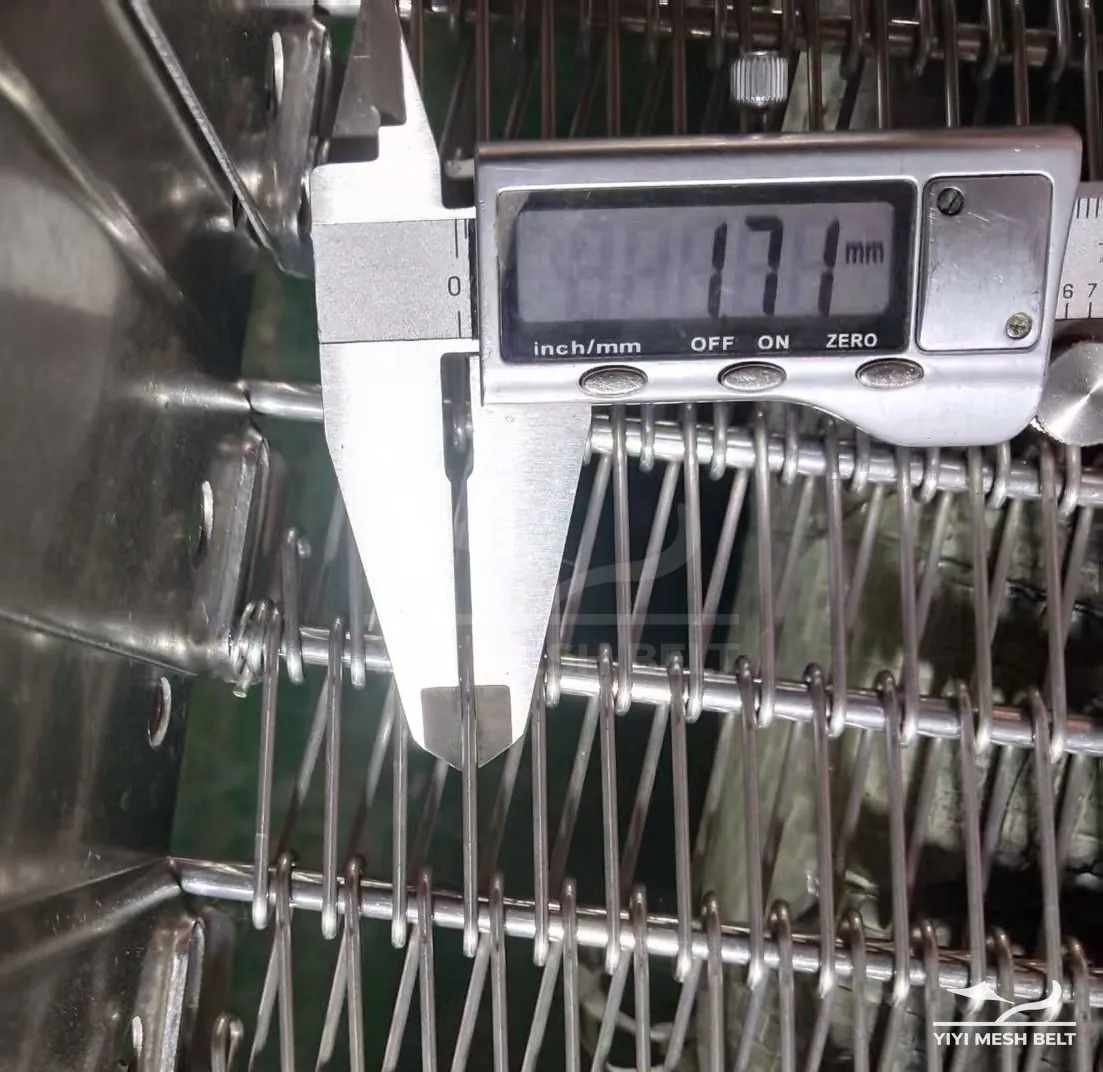
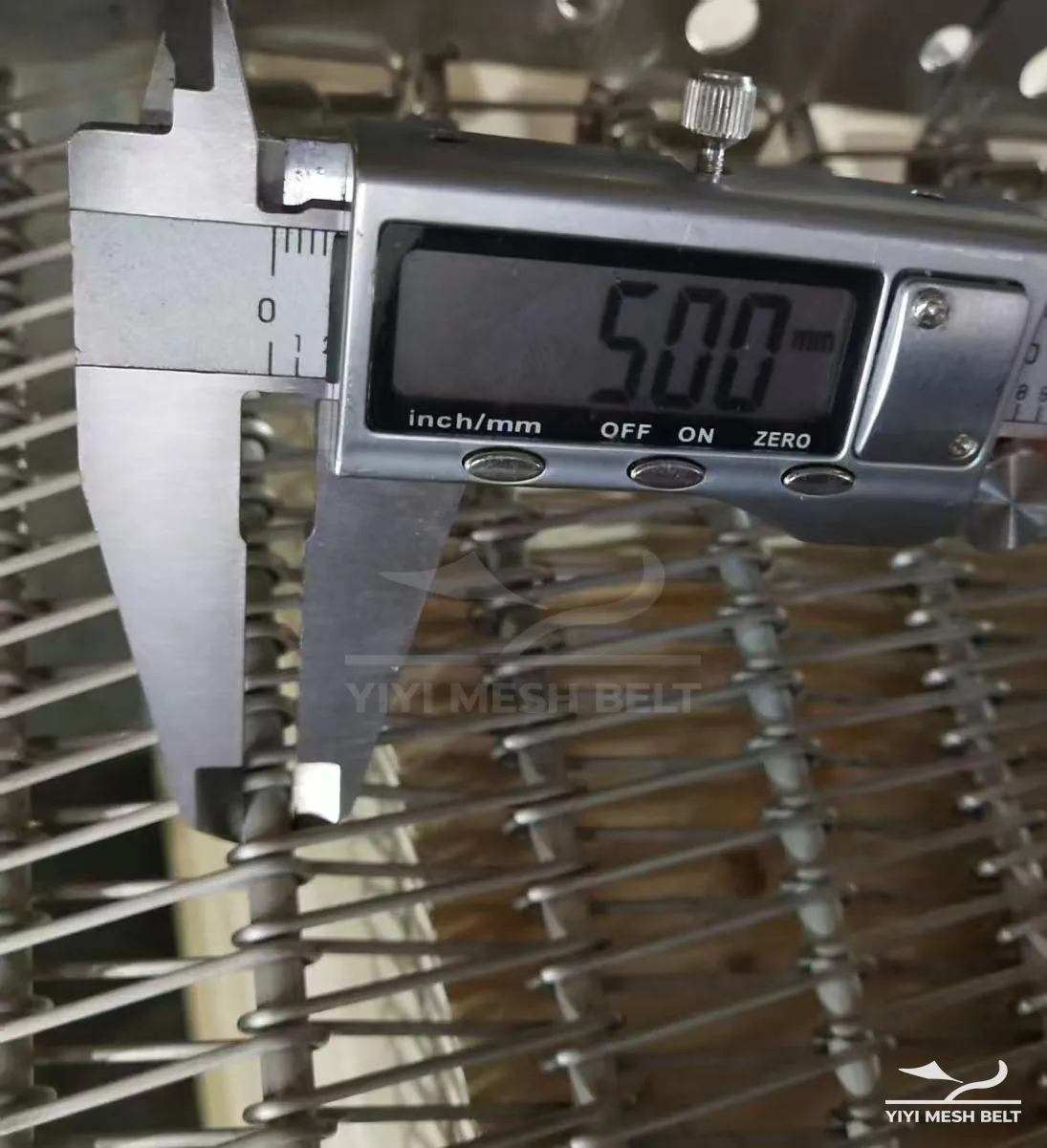
We measure the sizes on that order's drawing. Two recent SUS304 self-stacking belts, one for South Korea and one for India, both specify 1.7 mm wire and 5 mm rods on a 420 mm wide belt. The photos here show the wire at 1.71 mm and the rod at 5.00 mm.
| Item | South Korea (East Asia), mm (in) | India (South Asia), mm (in) |
|---|---|---|
| Belt width | 420 (16.54) | 420 (16.54) |
| Grade | SUS304 | SUS304 |
| Wire diameter | 1.7 (0.067) | 1.7 (0.067) |
| Rod diameter | 5 (0.197) | 5 (0.197) |
| Rod pitch | 30 (1.18) | 30 (1.18) |
| Stack plate height | 60 (2.36) | 90 (3.54) |
Inch values are rounded references. These are two project examples, not standard sizes for every order.
Why do we draw wire and rod ourselves?
We have stainless steel wire drawing and round-bar drawing in our own factory, so wire and rod can be prepared for the belt design and approved drawing. This does not mean every size on every order is drawn in-house.
You can read more in why we draw our own stainless steel wire.
Which documents can you ask for?
Ask for them before production. Our production orders can require a material certificate, and inspection photos and records are kept with the order. Tell us which documents you need, the test method and the acceptance criteria, so they are agreed on the order.
| Document | When to agree it | Note |
|---|---|---|
| Material certificate | Before production | Named on the order when required |
| Measured wire and rod sizes | Before production | Photos of readings can be shared |
| Test method and criteria | Before production | Confirmed for each project |
When is this not the right article for you?
If you need to choose a grade for your product and cleaning chemicals, or if your project needs a test this article does not list, please send us the requirement first. We confirm what applies to your order.
From Our Engineering Experience
Sunny: If the spectral or hardness check does not pass, we return the material. It is not used for order production. The spectral check is mainly about the nickel and chromium content.
FAQ
Do you test every batch of wire and rod?
Yes. Every batch of raw material goes through spectral and hardness testing before it is used.
What happens if a batch fails?
We return it to the supplier. Material that fails the spectral or hardness check is not used for order production.
What does the spectral check look at?
Mainly the chromium and nickel content, which we use to confirm the stainless steel grade.
Do you draw all wire and rod yourselves?
We have our own stainless wire drawing and round-bar drawing. That does not mean every size on every order is drawn in-house, so please confirm this for your order.
Can I get a material certificate?
Agree the documents you need before production. Test methods, acceptance criteria and material records are confirmed for each project.
Conclusion
Every batch is tested, failed material goes back, and diameters are measured against your drawing. If you want to see this on your order, send us your drawing or sample, and tell us which documents you need. WhatsApp +86 134 5177 3742 or contact us.
See our Self-Stacking Belt and how a self-stacking belt is made.
© 2026 Ningjin Yiyi Mesh Belt Co., Ltd. All rights reserved. Photos, drawings and data on this page belong to YIYI Mesh Belt and may not be copied or reused without written permission.

