

Floor space is expensive, so spirals keep getting tighter. A standard spiral belt has a limit in the turn. A small radius belt goes past it.
You need a small turning radius spiral freezer belt when the turn is tighter than a standard spiral belt can follow, typically below a turn ratio of about 1.15. The YIYI Mesh Belt Small Radius variant turns at a ratio of 1.1, for belt widths of 300 to 1,200 mm or custom.
We are YIYI Mesh Belt, a metal conveyor belt manufacturer in Ningjin, Shandong, China, manufacturing since 1998 on a 27,000 m² site with 280 units of equipment, including 9 welding robots. I am Sunny Ye. Compact spiral freezers and spirals fitted with wider belts on the same drum both push the turn ratio down. Below is when a small radius belt is the right choice, how it differs from a standard spiral belt, and what to send us for a review.

At a Glance
| Product | Small Radius Spiral Freezer Belt in SUS304 or SUS316 |
|---|---|
| Turn ratio | 1.1 (standard Spiral Freezer Belt: 1.15–2.5) |
| Reference width | 300–1,200 mm or custom |
| Buyer type | Compact spiral OEMs, plants adding capacity on an existing drum, distributors |
| What to send | Drum diameter, inside radius, belt width, direction, old belt photos or drawing |
What Is a Small Turning Radius Spiral Freezer Belt?
A small turning radius spiral freezer belt is a spiral belt built to turn tighter than a standard spiral belt. Its inner edge collapses further, so the belt can follow a small inside radius compared with its width. The YIYI Mesh Belt Small Radius variant is built for a turn ratio of 1.1.
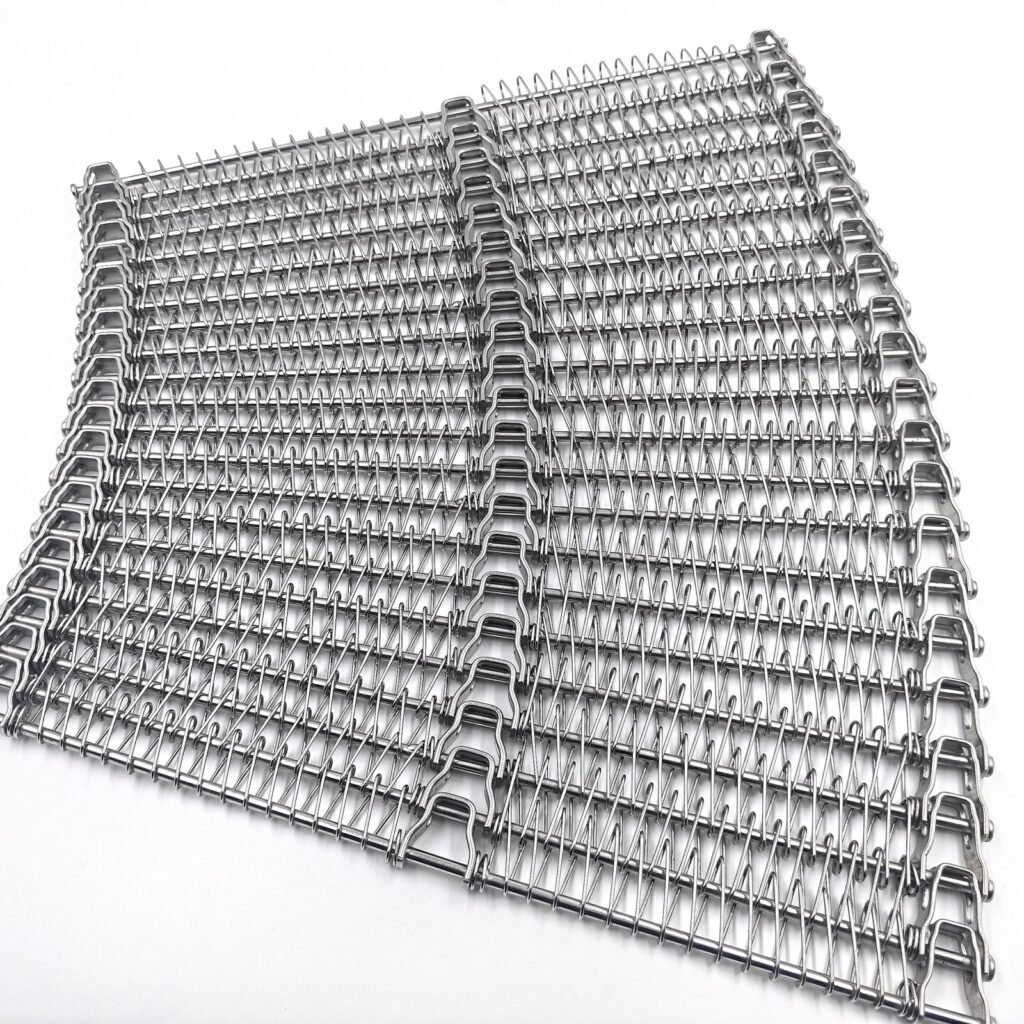
Turn ratio is the inside turning radius divided by the belt width. A standard spiral freezer belt from our range turns at ratios from 1.15 to 2.5. The Small Radius variant extends that to 1.1.
The difference sounds small. In the belt, it is not. At a ratio of 1.1, the inside radius is barely larger than the belt width, so the inner edge path is much shorter than the outer edge path. The inner edge has to collapse further in every turn, and the outer edge carries more of the load.
Our reference specification for the Small Radius variant:
| Parameter | Reference |
|---|---|
| Turn ratio | 1.1 |
| Width | 300–1,200 mm or custom |
| Rod pitch | 19.05 × 27.4 mm or 27.4 × 38.1 mm |
| Rod diameter | 5 mm |
| Spiral wire | 1.2–1.8 mm |
| Spiral pitch | 5–23 mm |
| Material | SUS304 / SUS316 |
| Edge | Button, flat-hat or rod welded |
Sunny's view: Customers sometimes call this a "tight turn belt". The name matters less than the number. I ask for the turn ratio, and the ratio tells us whether a small radius design is needed.
When Does a Spiral Need a Small Radius Belt?
A spiral needs a small radius belt when its turn ratio falls below what a standard spiral belt can follow. This happens on compact spirals with a small drum, when a plant wants a wider belt on an existing drum, or when a freezer was originally designed around a tight-turning belt.

Three situations bring customers to a small radius belt:
- Compact spirals. Where floor space is limited, the drum is small compared with the belt width, and the turn ratio drops toward 1.1.
- More capacity on the same drum. A plant wants a wider belt to carry more product. On the same drum, the wider belt lowers the turn ratio, sometimes below the standard range.
- Replacement of an existing tight-turn belt. The freezer was built around a small radius belt, and the replacement must match it.
In every case, the number to check is the same: inside radius divided by belt width. If the result is 1.15 or above, a standard spiral belt from our range may fit. Below that, a small radius design is usually needed. Read how to calculate turn ratio before you decide.
Sunny's view: When a plant asks for more width on the same drum, I calculate the new turn ratio with them in the first email. It answers half the project before anyone draws anything.
How Is a Small Radius Belt Built Differently?
A small radius belt changes the inner edge, the rod pitch and the links. The inner edge must collapse further, so the links allow more travel. Rod pitch is set as a combination, and links and rods are chosen to carry more load at the outer edge.
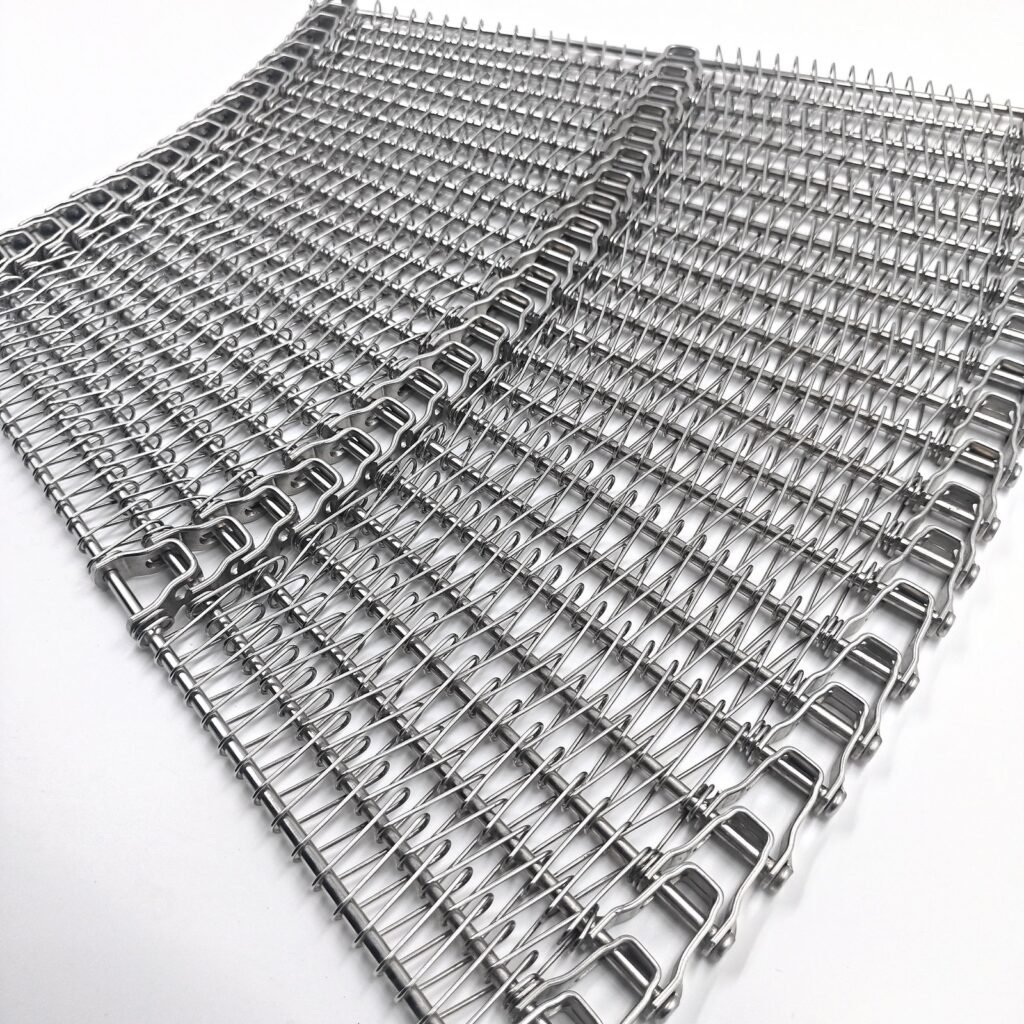
Compared with a standard Spiral Freezer Belt, these parts change:
| Part | Standard spiral belt | Small Radius variant |
|---|---|---|
| Turn ratio | 1.15–2.5 | 1.1 |
| Rod pitch | 19.05 to 40 mm | Combinations of 19.05 × 27.4 mm or 27.4 × 38.1 mm |
| Rod diameter | 5 / 6 mm or custom | 5 mm |
| Reference width | 300–2,900 mm or custom | 300–1,200 mm or custom |
| Edges | Button, flat-hat, rod welded, button cap, clinched | Button, flat-hat, rod welded |
We also build related configurations, such as 3-link designs and multi-row chain structures for very tight turns, to the approved drawing. These are project designs, reviewed one by one.
Because the inner edge works harder, rod quality matters even more. Our rods are drawn in-house; read how cold drawing affects cross rods.
Sunny's view: A small radius belt is not a standard belt with a different label. The inner edge is a different design, so we always build and check a trial section first.
What Are the Limits of a Small Radius Belt?
A small radius belt has a narrower reference width range, more parts working at the inner edge, and higher load on the outer edge in the turn. It needs careful cleaning of the inner edge and regular inspection. It is the right answer to a tight turn, not a universal upgrade.

Plan around these limits from the start:
- Width. Our reference range for the Small Radius variant is 300–1,200 mm. Wider belts need a project review.
- Load. In a tight turn, the outer edge carries more tension. Product weight, belt speed and the number of tiers all need to be part of the review.
- Cleaning. The inner edge collapses further, so the link slots must stay clean for the belt to turn freely. Build that into your sanitation routine.
- Inspection. Check the inner edge links and rods at planned intervals, and mark any stiff points.
- Drive and tension. Set up by the freezer maker for the belt that is fitted.
None of this makes a small radius belt fragile. It makes it a belt that needs the right application and the right care.
Sunny's view: I explain the limits in the first meeting. Customers who know the limits plan the cleaning and inspection, and those belts run well.
Small Radius or Standard Spiral Belt: How Do You Choose?
Choose by turn ratio first. At 1.15 or above, a standard spiral belt from our range can usually fit and is simpler. Below 1.15, a small radius design is usually needed. Then confirm width, load, cleaning and drive, because a small radius belt brings its own set of conditions.

| Question | Standard spiral belt | Small Radius belt |
|---|---|---|
| Turn ratio of your spiral | 1.15 or above | Around 1.1 |
| Belt width | Up to 2,900 mm reference | Up to 1,200 mm reference |
| Design complexity | Lower | Higher at the inner edge |
| Cleaning attention at the edge | Normal | Higher |
| Typical reason | Most spiral freezers and coolers | Compact spirals, more width on the same drum |
If your ratio sits close to 1.15, send us the measurements. Small differences in the inside radius or the overall width can move a project from one design to the other. We confirm the choice on the drawing before quoting.
Sunny's view: When both designs could work, I suggest the simpler one. A standard belt that fits comfortably is easier to clean, inspect and reorder.
What Should You Send to Order a Small Radius Belt?
Send the drum diameter, the inside radius to the belt edge, the overall and carrying width, the turning direction, the product and load, and photos or a sample of any existing belt. For customized orders, we confirm the drawing and build a trial section before full production starts.

Use this list for a small radius RFQ:
| Item | Notes |
|---|---|
| Drum diameter and inside radius | Inside radius measured to the inner edge of the belt |
| Overall and carrying width | Edge to edge, and usable mesh width |
| Turning direction | Clockwise or counter-clockwise seen from above; see how to confirm direction |
| Product and load | Product type, weight per metre, tiers, speed |
| Material and surface | SUS304 or SUS316; pickling or electropolishing where applicable |
| Existing belt | Drawing, sample with the drum edge marked, or close edge photos |
After review, we confirm the construction on the drawing for your approval. Production follows the approved drawing, with a trial section and first-article confirmation, and 100% final inspection before shipment.
Sunny's view: For small radius projects, I always ask for the inside radius twice: once from the drawing and once measured on site. The two numbers do not always agree.
When This Is Not the Right Approach
A small radius belt is not needed if your spiral turns at 1.15 or above; a standard Spiral Freezer Belt is usually simpler there. It is also not a fix for a standard belt that lifts in the turn because of damage, tension or rails. Read why a spiral belt flips or rides up first.
For spirals where the belt itself must carry the tiers above, a Self-Stacking Belt is a different solution with its own selection rules.
From Our Engineering Experience
Small radius projects start with arithmetic. Before anything is drawn, our engineers confirm the inside radius and the width, calculate the turn ratio, and decide whether a standard or a small radius construction fits.
Then the trial section answers the practical question. We build it to the approved drawing and, where the project requires a turning check, confirm that the inner edge collapses evenly in the turn before full production starts.
FAQ
What turn ratio does a small radius spiral belt have?
The YIYI Mesh Belt Small Radius Spiral Freezer Belt is built for a turn ratio of 1.1. Our standard Spiral Freezer Belt covers turn ratios from 1.15 to 2.5.
How wide can a small radius spiral belt be?
Our reference width for the Small Radius variant is 300 to 1,200 mm, with custom widths reviewed project by project.
Can I fit a wider belt on my existing drum with a small radius belt?
Sometimes. A wider belt lowers the turn ratio on the same drum. If the new ratio is around 1.1, a small radius design may fit, after a review of load, drive and cleaning.
Is a small radius belt harder to maintain?
It needs more attention at the inner edge, because the links collapse further. Keep the link slots clean and inspect the inner edge at planned intervals.
What material is a small radius spiral belt made from?
SUS304 or SUS316 stainless steel, with pickling or electropolishing where applicable to the project.
Conclusion
A small radius belt answers one question: a turn tighter than a standard spiral belt can follow. Calculate your turn ratio first, then choose the simplest belt that fits it.
Is your turn tighter than 1.15?
Send the drum diameter, the inside radius, the belt width and the direction. We calculate the turn ratio with you and confirm whether a small radius design is needed.
See Small Radius specifications →WhatsApp Sunny📄 Small Radius Spiral Freezer Belt Technical Specification (PDF) · Email: info@yiyimeshbelt.com
Related reading: What is turn ratio? · How cold drawing affects cross rods · Choosing a spiral freezer belt for IQF · Spiral freezer belt RFQ: what to prepare (yiyimeshbelts.com)

Sunny Ye
Sales Director, YIYI Mesh Belt · 15 years in metal conveyor belt projects
I work with spiral freezer builders, distributors and plant teams on belt selection and replacement. Questions about this article? Send them to me directly.
Follow Sunny on LinkedIn · Last updated: 2026-10-13

